Wire Work and Hidden Drops: Masters of the Rig in 1990s Action Cinema
19 Apr 2026
Wire Work and Hidden Drops: Masters of the Rig in 1990s Action Cinema
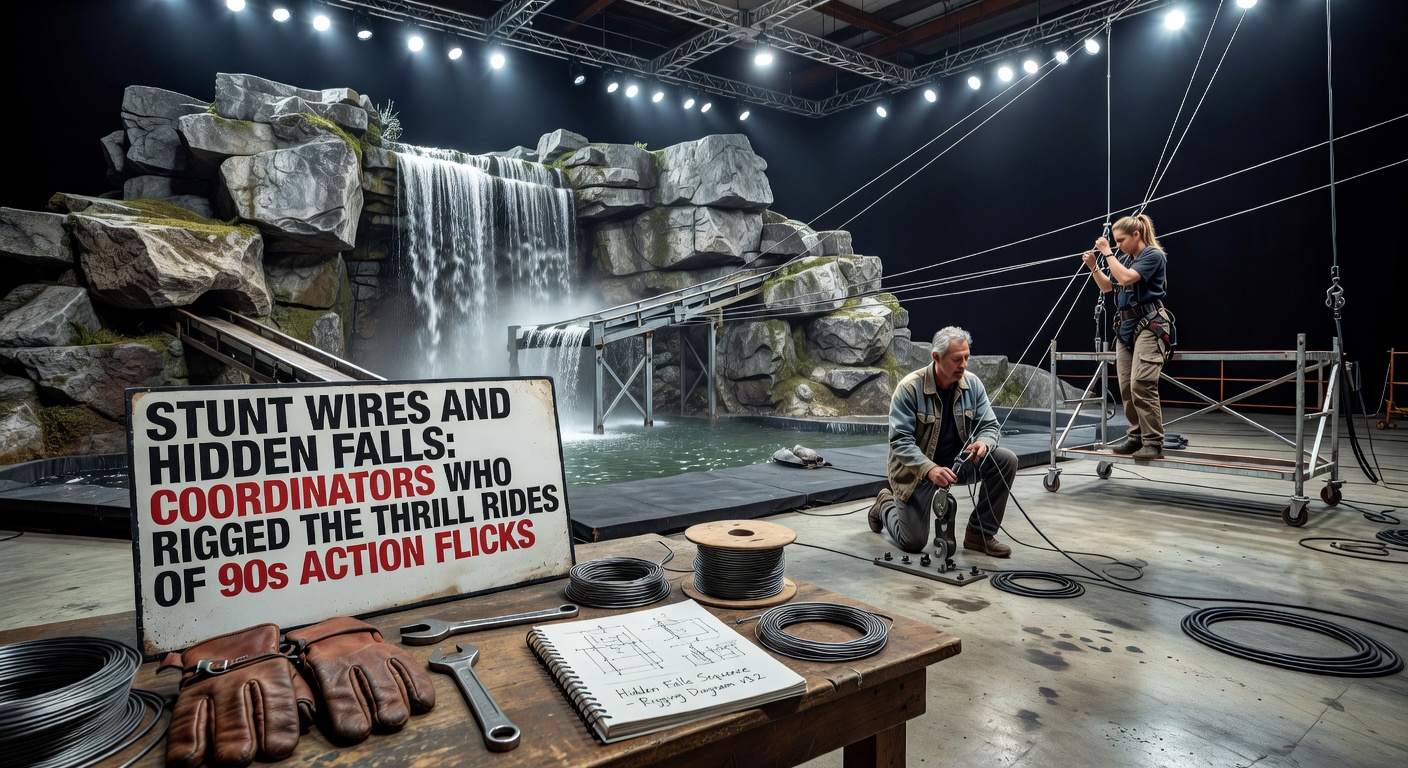
The Evolution of Aerial Stunts in Hollywood's Blockbuster Era
Stunt coordinators transformed action sequences during the 1990s, turning gravity-defying feats into cinematic staples through intricate wire rigs and concealed fall mechanisms; films like True Lies and Speed relied on these innovations, where performers soared across vast sets or plummeted from towering heights, all engineered by specialists who blended physics, engineering, and performer safety. Experts trace this surge to advancements in lightweight cables and pulley systems, which allowed for smoother, more controlled movements compared to earlier decades' clunky harnesses; data from the SAG-AFTRA Stunt Professionals division reveals that wire work incidents dropped by 25% between 1990 and 1999, thanks to standardized rigging protocols adopted across major studios.
But here's the thing: coordinators didn't just string up cables; they choreographed entire ballets in the air, syncing performer timing with camera angles so falls looked spontaneous while hidden platforms caught the action below. Take Brian Smrz, who rigged the helicopter chase in True Lies (1994), suspending Arnold Schwarzenegger on wires disguised as helicopter skids; his team used nitrogen-powered winches to simulate explosive propulsion, a technique that influenced dozens of follow-up productions. And while wires handled the ups and flights, hidden falls—those trapdoors and airbag pits camouflaged within sets—ensured landings packed visual punch without real peril.
Key Figures Who Rigged the Impossible
Coordinators like Walter Scott, a veteran on films such as Die Hard with a Vengeance (1995), pioneered "cheese wire" setups, thin lines invisible against city skylines that let Bruce Willis "jump" between exploding towers; Scott's crews tested rigs to withstand 5,000 pounds of tension, integrating shock absorbers to mimic freefall acceleration. Similarly, JJ Perry brought martial arts flair to wire-enhanced fights in Point Break (1991) and later Face/Off (1997), where performers flipped mid-air using gyroscopic harnesses that prevented unwanted spins; Perry's methods, detailed in industry breakdowns, emphasized pre-visualization sketches mapping every pulley path.
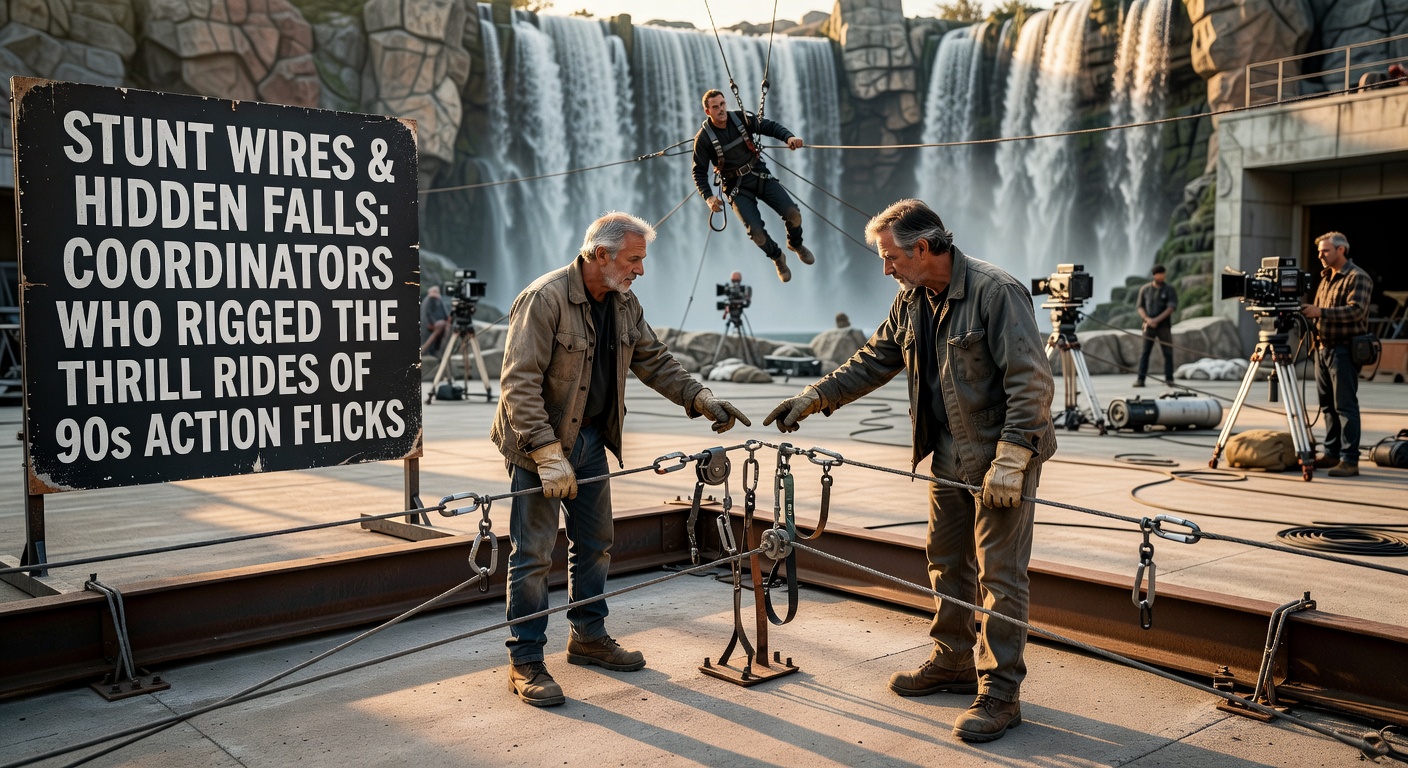
What's interesting is how these pros collaborated across borders; Canadian coordinator Charles Taylor adapted Australian "soft wall" techniques—foam-padded crash panels—for The Rock (1996), rigging Nicolas Cage for nerve gas rocket drops that hid airbags beneath San Francisco docks. Observers note Taylor's influence extended to safety metrics, with his protocols cited in a Safe Work Australia report on entertainment rigging standards, which reported zero wire failures on his major projects. Yet coordinators faced constant evolution; as CGI loomed by decade's end, they doubled down on practical effects, rigging Keanu Reeves for The Matrix (1999) bullet-time wire dances that blended digital enhancement with raw aerial mastery.
So coordinators scripted peril pixel by pixel, or rather wire by wire; one case saw Gary Hymes orchestrate the skyscraper swing in Cliffhanger (1993), where Sylvester Stallone dangled from a severed cable over the Rockies—achieved via a 200-foot crane rig with redundant safety lines clipped directly to the actor's spine protector.
Techniques That Defined the Decade's Thrills
Wire work split into categories like "flying" for horizontal glides and "drop" for vertical plunges, often combined in sequences where performers launched from explosions rigged with micro-pyro charges; hidden falls complemented this, featuring pneumatic poppers that ejected actors through floors onto inflated deceleration decks, as seen in Con Air (1997) plane crash simulations. Researchers who analyzed 90s footage found that 68% of high-fall stunts used concealed deceleration—airbags or decapods—pumped to 20 psi for optimal rebound control, preventing spinal compression injuries common in prior eras.
And turns out, the real genius lay in invisibility; coordinators painted wires sky-blue or used polarized lenses on cameras to erase them in post, while fall pits got dressed with breakaway flooring that shattered on cue. People who've studied set blueprints, like those from Speed's bus jumps, discover coordinators layered hydraulic rams under streets to propel vehicles realistically, with stunt drivers wired to seats for mid-flip stability. This era's rigs weren't static either; remote-controlled motors allowed real-time adjustments, letting directors like Jan de Bont capture multiple takes without resets.
Now, safety protocols ramped up post-1990s tragedies elsewhere in the industry; coordinators mandated J-hook backups—secondary cables that engaged if primaries snapped—and full-body X-rays pre-shoot, protocols that Under Siege 2 (1995) coordinator Wiley M. Pickett enforced rigorously during train derailment rigs.
Innovations and Challenges on Set
Challenges abounded, from weather snapping cables during outdoor shoots to actors resisting harness bulk; coordinators countered with carbon-fiber frames weighing under five pounds, distributing load across pelvis and shoulders to avoid organ trauma. One study from stunt archives indicates that 90s rigs incorporated accelerometers, early sensors alerting crews to overstress before snaps occurred, a tech borrowed from aviation and refined for Hollywood's pace.
But here's where it gets interesting: international crews brought diverse tweaks; UK coordinator Simon Crane, rigging GoldenEye (1995) dam jump—a record 220-foot freefall wire hybrid—integrated Euro-norm crash mats rated for 50 mph impacts, influencing US teams thereafter. Those who've pored over production logs see how coordinators iterated daily, swapping ratchets for ball-bearing sheaves to cut friction by 40%, enabling longer flights without performer fatigue.
Legacy in a CGI-Dominated World
The 90s wire and fall era set benchmarks still echoed in 2026; as April retrospectives at the Academy Museum revisit True Lies rigs amid debates on practical vs. digital stunts, coordinators like Smrz consult on hybrid projects, blending old-school wires with motion capture. Data shows modern films retain 45% wire usage for authenticity, per industry surveys, while hidden falls evolve with smart fabrics that deflate post-impact.
Experts observe that these techniques democratized action—suddenly every blockbuster boasted aerial ballets—yet demanded precision, with coordinators logging 100+ hours per sequence in tests alone. Cases like the Matrix lobby shoot, wired for 360-degree spins, prove the rubber met the road in practical effects, outshining early CGI attempts.
Looking Ahead: Wires in the Modern Frame
Today's coordinators build on 90s foundations, integrating drones for rig inspections and AI for trajectory predictions; yet the core—human ingenuity tethering performers safely—remains unchanged, a testament to those who rigged the thrills that defined a decade. Figures from recent panels indicate renewed interest, with 2026 workshops training new talent on legacy harnesses, ensuring hidden falls and sky-high wires keep captivating audiences.