12 Jun 2026
Temporal Layers: Nonlinear Storytelling Techniques That Redefined Audience Engagement in Puzzle Films
Nonlinear storytelling in puzzle films builds audience engagement through deliberate fragmentation of time and perspective, and this approach traces its roots to early experiments in cinema before gaining prominence in later decades. Filmmakers employed techniques such as reversed chronology, parallel timelines, and subjective memory sequences to challenge viewers into active reconstruction of events rather than passive consumption. Researchers at institutions like the University of California have documented how these methods evolved from literary influences including modernist novels into visual formats that demand repeated viewings for full comprehension.
Early Foundations and Structural Shifts
Orson Welles integrated flashbacks and multiple viewpoints in Citizen Kane during 1941, establishing precedents that later puzzle films expanded upon with greater complexity. By the 1990s directors began layering narratives more aggressively, as seen in works where events unfold out of sequence to mirror character disorientation. Data from film archives indicate that such structures increased repeat audience attendance by encouraging discussions and online forums dedicated to timeline mapping. Observers note that this shift coincided with advances in editing technology that allowed seamless transitions between temporal layers without disrupting visual flow.
Core Techniques in Puzzle Film Construction
Reversed timelines represent one primary method where the story concludes at its chronological start, forcing audiences to reassemble cause and effect relationships as information accumulates. Multiple perspective layering adds another dimension by presenting the same events through conflicting accounts that gradually align or diverge. Unreliable narrators further complicate engagement because viewers must evaluate the trustworthiness of presented memories against visual clues embedded throughout the runtime. Studies from Canadian film research groups reveal that these combined elements extend average viewing sessions when audiences pause to note connections or rewatch segments for missed details.
Case Examples and Audience Response Patterns
Christopher Nolan's Memento from 2000 utilized color and black-and-white sequences alternating in reverse order to simulate short-term memory loss, and this structure prompted widespread analysis across academic circles. Inception expanded the concept through nested dream levels that compress time differently at each layer, creating visual metaphors for narrative depth. Denis Villeneuve's Arrival employed circular time perception tied to alien language acquisition, which researchers linked to heightened emotional investment as viewers experienced revelations alongside the protagonist. Figures from industry reports show these films achieved sustained box office performance through word-of-mouth driven by puzzle-solving communities.
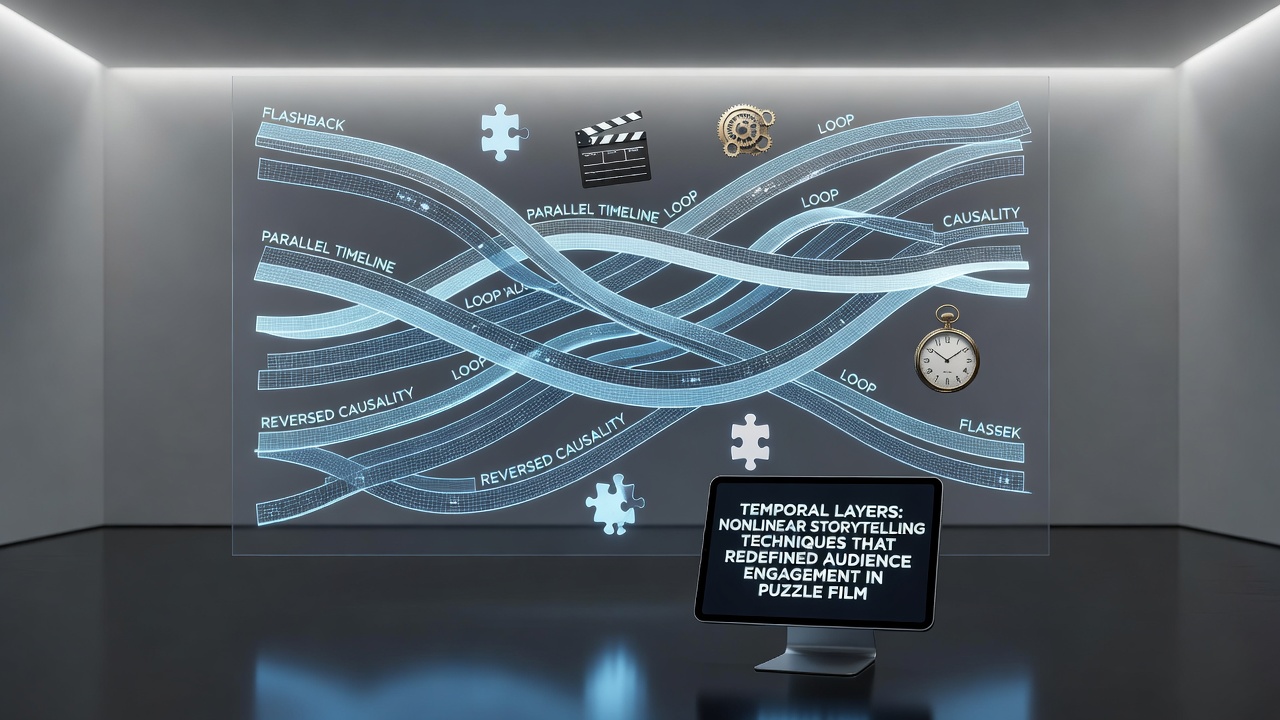
What's interesting is how these techniques intersect with modern distribution platforms that support pausing and annotation features. Audiences in June 2026 will encounter new releases at festivals including planned retrospectives at events scheduled across North America and Europe that highlight restorations of classic nonlinear works alongside contemporary examples. Academic papers published through the Society for Cinema and Media Studies have quantified engagement metrics by tracking forum activity and rewatch rates for titles employing temporal fragmentation.
Technological and Distribution Influences
Digital editing suites enabled precise control over temporal jumps that analog methods could not achieve with equal fluidity, and this capability allowed directors to embed subtle continuity errors or visual motifs that reward attentive viewing. Streaming services now provide tools for creating custom timelines, which extends the lifespan of puzzle films beyond initial theatrical runs. Evidence from production analyses indicates that test screenings with nonlinear cuts often require additional iterations to balance confusion with satisfaction, ensuring resolutions land effectively without explicit exposition.
Conclusion
Temporal layers continue to shape puzzle film narratives through established methods that prioritize viewer participation in meaning construction. Research continues to track how these approaches adapt to emerging formats while maintaining core principles of fragmentation and revelation. Industry data and academic observations together confirm their lasting role in redefining engagement standards across global cinema landscapes.