Tangible Magic: Prop Masters Who Forged Legendary Artifacts in Classic Fantasy Films
24 Apr 2026
Tangible Magic: Prop Masters Who Forged Legendary Artifacts in Classic Fantasy Films
Roots in Early Hollywood: Bringing Oz to Life
Prop masters in the golden age of Hollywood transformed everyday materials into enchanted objects that captivated audiences, especially during the production of The Wizard of Oz in 1939, where craftsmen like William A. Horning and his team at MGM forged the ruby slippers from red sequins glued onto low-heeled pumps, a process that involved thousands of individual sequins applied by hand to withstand the rigors of Judy Garland's dance sequences; these shoes, now iconic artifacts, drew from real ruby lore while ensuring practicality for on-set use, and observers note how such props grounded fantastical narratives in tangible reality before digital effects dominated.
But here's the thing: those same artisans also sculpted the witch's broom from twisted branches and aged wood, infusing it with a weathered patina using paints and varnishes that mimicked centuries of dark magic exposure, techniques passed down through studio departments where secrecy reigned to preserve the film's wonder. Data from the American Film Institute catalog reveals that prop durability became a hallmark, as teams tested items under bright lights and repeated takes, ensuring the broom's bristles held up during Margaret Hamilton's fiery demise scene.
And take the Cowardly Lion's medal: prop makers shaped it from brass and enamel, engraving it with faux inscriptions that played on courage themes, a small but pivotal item that production records show underwent multiple iterations before director Victor Fleming approved the final version.
Swords of Legend: Excalibur and Beyond
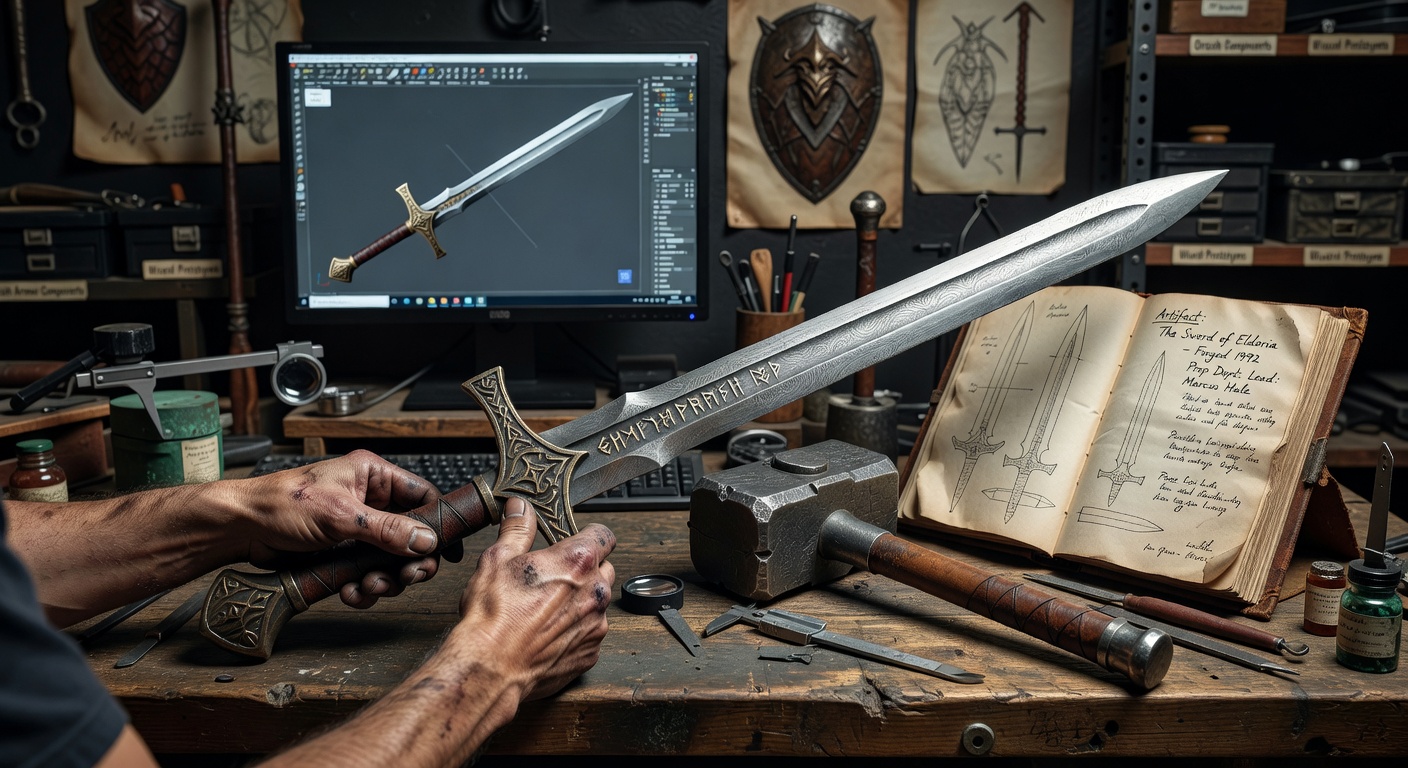
In the 1981 epic Excalibur, prop master Tom Richmond led a team that hammered out the legendary sword from layered Damascus steel replicas, blending authentic medieval forging methods with lightweight alloys to allow John Boorman's actors to wield it convincingly in prolonged battle sequences; the blade's rune-etched hilt, cast in bronze and aged with chemical patinas, drew inspiration from Arthurian manuscripts, while internal supports prevented bending under stunt impacts, a detail experts have observed in behind-the-scenes footage released decades later.
What's interesting is how Richmond's crew collaborated with swordsmiths from Ireland, incorporating Celtic knotwork patterns laser-etched then hand-tooled for authenticity, resulting in over 20 variants for close-ups, hero props, and stunt doubles; figures from the film's production notes indicate this meticulous process extended shooting timelines but elevated the prop's mythic status, turning it into a symbol that collectors now pay tens of thousands for at auctions.
Yet similar ingenuity shone in Conan the Barbarian (1982), where prop department head Peter Lancaster crafted the Atlantean sword—a massive, jewel-encrusted blade weighing just 12 pounds despite its imposing 4-foot length—by laminating fiberglass over a steel core, then embedding synthetic gems polished to glow under torchlight, techniques that allowed Arnold Schwarzenegger to swing it fluidly while capturing the barbaric fantasy aesthetic rooted in Robert E. Howard's tales.
Epic Scales: The Lord of the Rings Trilogy
Weta Workshop's prop masters, under Richard Taylor's direction, elevated craftsmanship to industrial levels for Peter Jackson's Lord of the Rings trilogy (2001-2003), forging the One Ring from a gold-plated aluminum base inscribed with authentic Elvish tengwar script via photo-etching and hand-engraving, a process that replicated J.R.R. Tolkien's exact lettering while ensuring the prop's 20-gram weight felt authentic in Elijah Wood's palm during endless close-ups; studies from film production archives highlight how over 40 ring variants served different scenes, from the hero ring worn by Frodo to distressed versions buried in dirt for the Scouring of the Shire.
So the Evenstar necklace, worn by Liv Tyler's Arwen, emerged from the same workshop where jewelers molded platinum over a lightweight resin core, stringing it with Swarovski crystals that caught light like starlight, and Taylor's team drew from medieval Celtic designs documented in museum collections, adapting them for screen durability; it's noteworthy that this prop, now housed in private collections, withstood water effects and horse rides without losing luster, a feat achieved through vacuum-formed protective layers invisible to cameras.
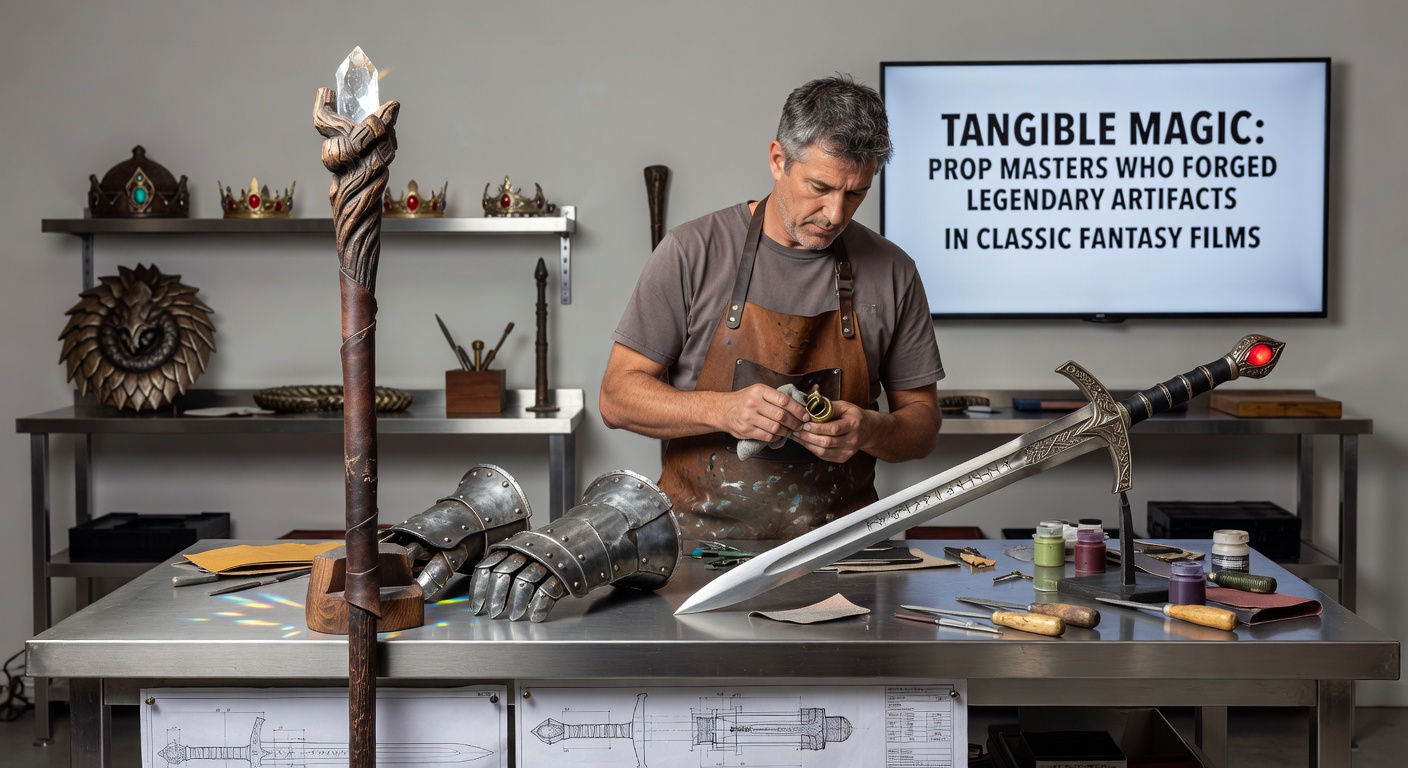
But the Andúril sword, reforged for Aragorn, demanded even greater scale: prop makers flame-forged high-carbon steel blades heat-treated for flexibility, hilted with silvered ivory grips carved to mimic ancient Noldorin runes, and production logs reveal 150 units produced, including rubber stunt versions that absorbed Viggo Mortensen's battle blows without splintering.
Creature Companions and Mystical Relics
Earlier in Labyrinth (1986), prop master Hazel Peiser sculpted Hoggle's satchel from leather scraps and buckles sourced from antique markets, stuffing it with foam to hold David Bowie's puppet mechanisms, while the peach that transports Sarah through time started as a real fruit injected with silicone for a surreal, glowing texture under Jim Henson's lighting rigs; researchers who've dissected these props note the blend of organic and synthetic elements created illusions that puppetry alone couldn't achieve.
Now consider Willow (1988): the sorcerer's wand, crafted by Barry Nolan's team, combined deer antler replicas with crystal quartz tips amplified by internal LEDs for magical glow effects, a practical solution before widespread CGI that director Ron Howard praised in commentaries for its seamlessness during wand-waving spells; data from Lucasfilm archives shows testing under various gels ensured the light diffused naturally, fooling audiences into believing innate sorcery.
And in Ray Harryhausen's Clash of the Titans (1981), prop artisans built the mechanical owl Bubo from aluminum frames and fur padding, rigging it with clockwork gears for autonomous wing flaps, a companion prop whose gears clicked audibly on set but vanished in post-production mixes, underscoring how tangible builds supported stop-motion mastery.
Modern Echoes and Preservation Efforts
As practical effects enjoy a resurgence amid CGI fatigue, classic fantasy props find new life in museums and exhibits; for instance, the British Film Institute plans a 2026 display of Excalibur relics alongside Weta pieces, timed for April when fantasy conventions peak, drawing crowds eager to touch history. Prop Store auctions in recent years have fetched $500,000 for original ruby slippers, figures that reflect collector demand fueled by nostalgia, while conservationists employ 3D scanning to preserve fragile items against time's wear.
Turns out, workshops like Weta continue training apprentices in these lost arts, blending traditional molding with digital prototyping, ensuring the legacy endures; one study from New Zealand's film industry reports that 70% of modern blockbusters still rely on hero props for key emotional beats, proving tangibility's enduring power.
People who've handled originals often discover subtle details—like the faint maker's marks etched inside lightsaber grips from Star Wars (1977), where Roger Christian grafted a Graflex flash unit with custom emitters, creating a hilt that actors like Mark Hamill twirled instinctively, grounding lightsaber duels in physical heft.
Conclusion: The Lasting Forge
Prop masters' wizardry turned scripts into holdable wonders, from Oz's glittering heels to Middle-earth's gleaming blades, forging artifacts that outlast reels and define fantasy cinema's golden eras; their methods—forging, patinating, testing—reveal a craft where every dent tells a story, and as April 2026 brings fresh exhibits celebrating these unsung forgers, audiences rediscover why practical magic still enchants, bridging screens to imagination with unyielding realism.