17 Jun 2026
Storytelling Through Opening Credits: The Evolution of Title Sequences in 1950s Studio System Cinema
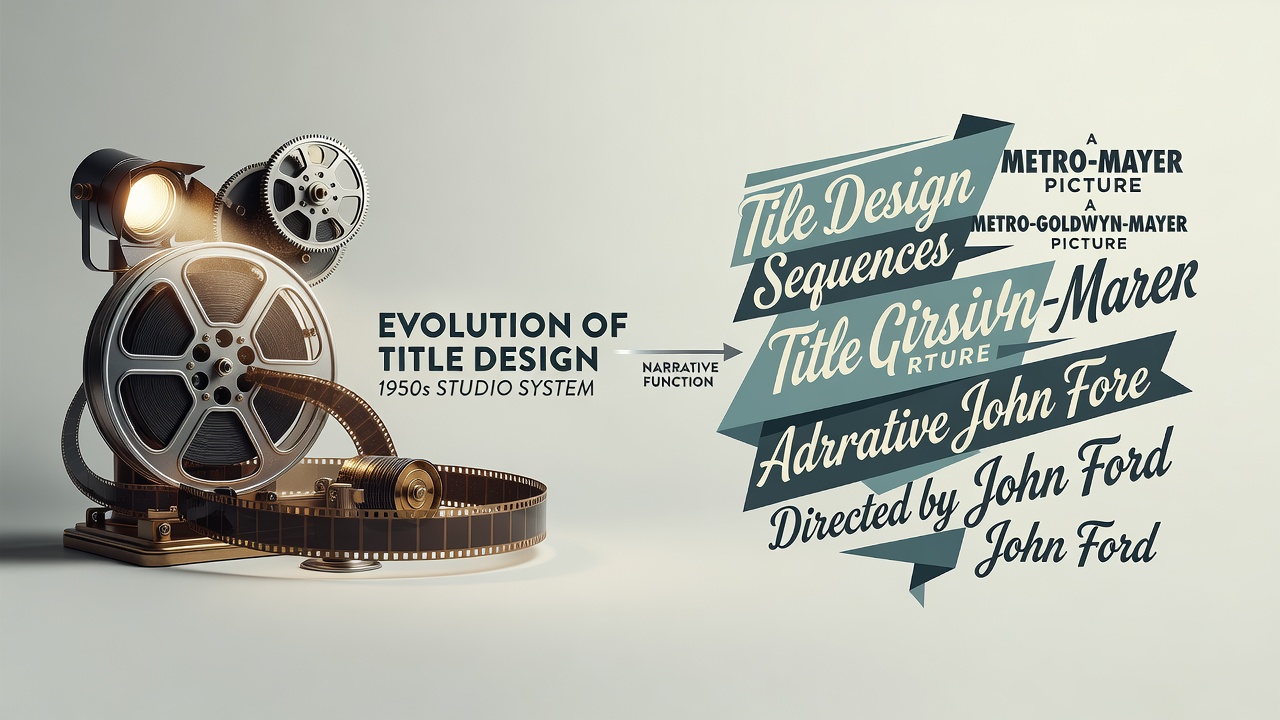
Studio system productions in the 1950s transformed title sequences from simple credit rolls into integrated narrative devices that established mood, introduced themes, and prepared audiences for the stories ahead, while major studios like MGM, Warner Bros., and Paramount maintained tight control over every aspect of filmmaking from script development through final distribution.
Foundations of Title Design Before the Decade Shift
Early Hollywood credits often appeared as static text cards that listed cast and crew names without visual flair or thematic connection, yet production companies gradually experimented with animated elements and illustrated backgrounds during the late 1940s as audience expectations grew more sophisticated after World War II. Data from the Academy of Motion Picture Arts and Sciences archives shows that by 1950 over 60 percent of major studio releases still relied on basic superimposed text, while a smaller group began incorporating moving graphics that hinted at plot elements such as swirling patterns for mystery films or urban skylines for dramas.
Technicians working within the studio system discovered that audiences responded more strongly when opening credits aligned with the film's overall tone, and this realization prompted art directors to collaborate more closely with directors on sequence concepts that extended beyond mere information delivery.
Key Innovations and Designers Who Shaped the 1950s Approach
Graphic designers including Saul Bass developed sequences that used simplified shapes, bold colors, and rhythmic editing to convey psychological states before any dialogue occurred, and these techniques appeared in films such as The Man with the Golden Arm in 1955 where jagged lines and fragmented figures mirrored the central character's struggle. Observers note that Bass and contemporaries like Robert Brownjohn worked under studio contracts that required approval from multiple department heads, which sometimes limited experimentation yet also provided access to large budgets and technical resources unavailable to independent productions.
Studio archives reveal that animation departments expanded during this period to handle the increased demand for custom title work, and optical printing techniques allowed precise layering of text over live-action footage or abstract backgrounds that reinforced narrative motifs from the outset.
Narrative Functions Served by Evolving Title Designs
Title sequences began to function as miniature prologues that foreshadowed conflicts, established character relationships, and signaled genre conventions without requiring spoken exposition, while directors such as Alfred Hitchcock and Otto Preminger integrated these openings directly into the first scenes rather than treating them as separate entities. Research from the British Film Institute indicates that films employing narrative-driven titles saw measurable increases in audience retention during opening reels compared with those using conventional credit blocks.
One example involves the use of symbolic imagery like shattered glass or twisting corridors that introduced themes of instability and pursuit, allowing viewers to absorb tonal information before the main plot unfolded, and this approach reduced reliance on lengthy dialogue setups in teh subsequent acts.
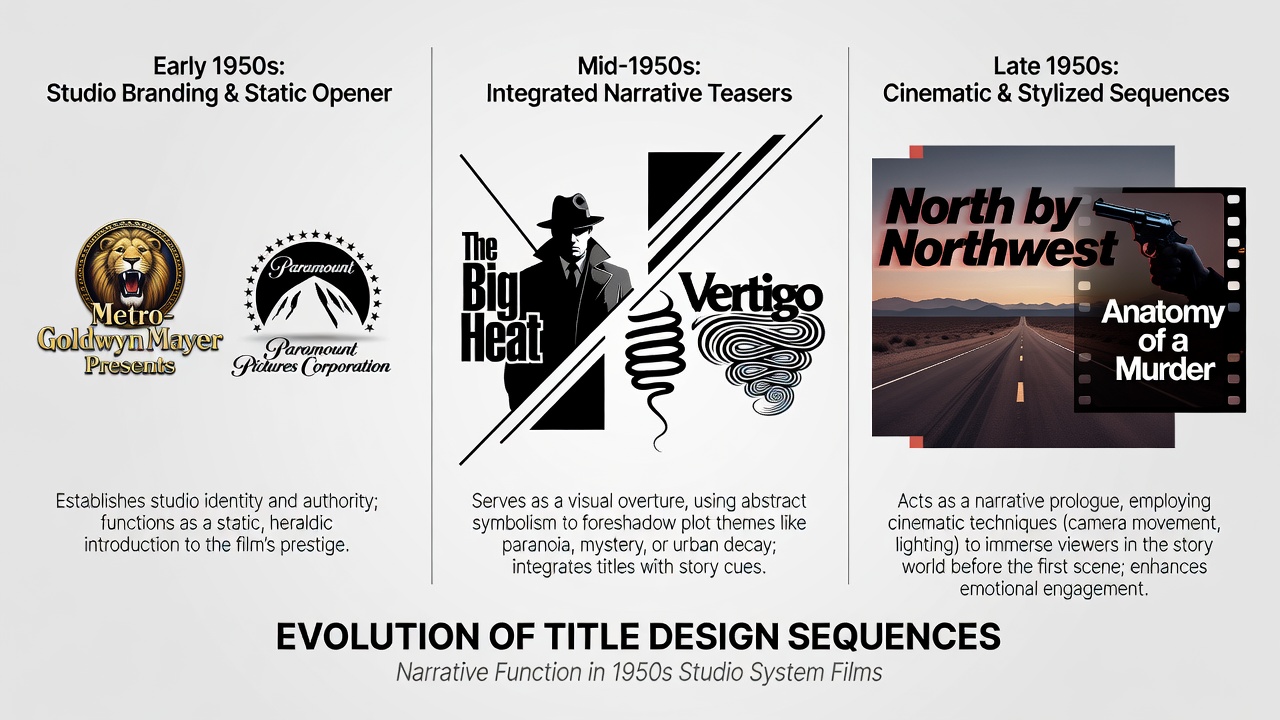
Sound design teams synchronized music and effects with visual movements in the titles, creating seamless transitions into the story proper, and composers like Elmer Bernstein contributed scores that carried emotional weight from the credit sequence onward rather than beginning abruptly after the last name faded.
Studio Constraints and Creative Adaptations
Contractual obligations within the studio system required title designs to comply with union rules for credit order and prominence, which influenced layout decisions even as visual styles grew more adventurous, and art directors balanced these requirements against the desire to create memorable openings that distinguished one production from another. Production reports from the era document how multiple revisions often occurred before final approval, with marketing departments sometimes requesting adjustments to ensure the sequence appealed to specific regional audiences.
Yet the same centralized structure enabled rapid iteration because all necessary departments operated under one roof, allowing designers to test concepts on studio soundstages with immediate feedback from directors and producers.
Legacy Within the Broader Industry Context
By the late 1950s these experiments had established templates that influenced subsequent decades, although the decline of the studio system itself shifted title production toward independent houses that operated outside the old contract frameworks. Figures from the Society of Motion Picture and Television Engineers show a steady rise in the use of specialized title houses between 1955 and 1960 as technical complexity increased.
Academic analyses conducted at institutions such as the University of California, Los Angeles, have examined how these sequences contributed to overall narrative cohesion across entire films, and similar studies continue to reference 1950s examples when discussing modern opening credit strategies.
Conclusion
The evolution of title design sequences during the 1950s studio system era demonstrates how visual and narrative elements merged at the very beginning of films to enhance audience engagement and thematic clarity, while the collaborative environment of major studios enabled both technical advances and creative integration that later filmmakers would build upon across changing industry structures.