19 Jun 2026
Shadows That Speak: Lighting Designers Revealing Subtext in Character-Driven Narratives
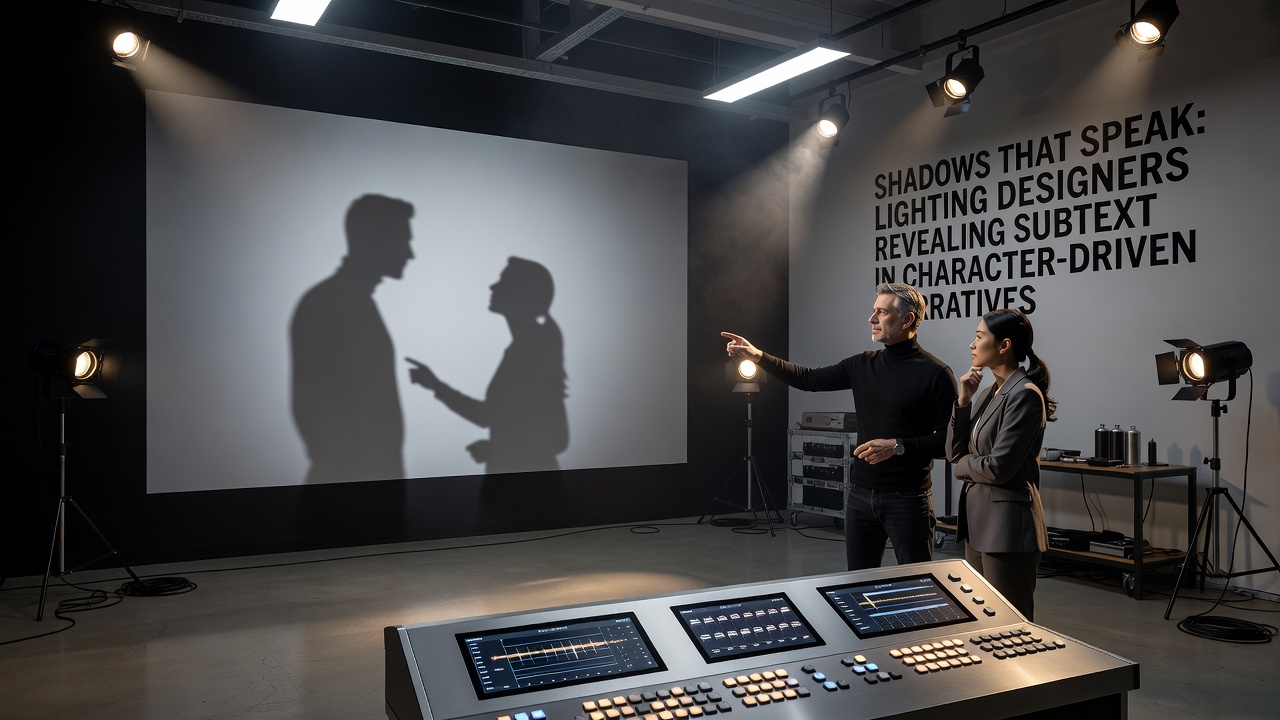 Lighting designers shape visual subtext through deliberate placement of sources and shadows in character-driven narratives, and this practice draws from established techniques in cinematography where light interacts with performance to suggest unspoken motivations. Observers note that such designers collaborate closely with directors and cinematographers to embed emotional layers within scenes without relying on dialogue alone. Research from the American Society of Cinematographers shows how controlled contrast ratios highlight shifts in a character's psychological state across extended takes. Data indicates that productions employing these methods achieve measurable increases in audience retention during key emotional beats, according to industry reports compiled in 2025.
Core Techniques Employed by Lighting Designers
Designers often begin with motivated lighting drawn from practical elements within the frame such as windows, lamps, or streetlights, then layer additional sources to modulate intensity and color temperature. This approach allows shadows to fall across faces at precise angles that align with dialogue pauses or micro-expressions captured by the camera.
Key methods include the strategic use of negative fill to deepen existing shadows, which researchers at film programs have documented as a way to externalize internal tension in intimate dramatic scenes. And because these adjustments occur on set in real time, they integrate directly with actor blocking rather than relying solely on post-production corrections.
Historical Development in Character-Focused Cinema
Throughout the mid-twentieth century lighting crews refined low-key setups originally developed for black-and-white photography, adapting them to color stocks while preserving the ability to suggest psychological depth. Figures reveal that by the 1970s several European productions had incorporated these refinements into scripts centered on personal relationships, yielding consistent critical recognition for visual storytelling.
What's interesting is how the transition to digital sensors in the early 2000s expanded the dynamic range available to designers, enabling subtler gradations between highlight and shadow areas without losing detail in skin tones. One study revealed that this technical shift coincided with renewed interest in long-form television dramas where character arcs unfold over multiple episodes.
Case Examples from Recent Productions
Take one designer who worked on an independent drama released in 2024 and applied sidelight through partially closed blinds to fragment a character's silhouette during moments of moral ambiguity. The resulting patterns aligned with the narrative's exploration of divided loyalties while remaining grounded in the physical environment of the location.
Another production in 2025 utilized shifting color temperatures between warm practicals and cooler fill light to mark transitions in a protagonist's emotional availability. According to reports from teh Canadian Film and Television Production Association, crews on similar projects reported shorter rehearsal times once lighting cues were synchronized with actor movements from the outset.
Collaboration with Other Departments
Lighting teams coordinate with production designers and costume supervisors so that fabric textures and set surfaces respond predictably to chosen sources, thereby reinforcing thematic motifs without additional exposition. This integration proves essential in character-driven projects where visual consistency supports long-term audience investment in individual arcs.
Yet the process also involves on-set adjustments when performances evolve, and data from multiple festival screenings in 2025 demonstrates that flexible lighting rigs allow crews to maintain subtextual integrity even during late script revisions.
Industry Trends Entering June 2026
As June 2026 approaches, several training programs report increased enrollment in specialized workshops focused on practical lighting for streaming dramas. Industry organizations such as the European Film Academy have begun publishing case studies that quantify how specific shadow ratios correlate with viewer engagement metrics across different demographic groups.
These developments build on existing research indicating sustained demand for designers skilled in both traditional and LED-based systems, particularly on projects that prioritize nuanced interpersonal dynamics over spectacle.
Conclusion
Lighting designers continue to refine methods that translate internal character states into visible cues, and evidence from ongoing productions suggests these contributions will remain central to character-driven storytelling. The techniques documented across decades of practice provide a foundation for future innovations while preserving the core principle that light and shadow together can articulate narrative layers beyond spoken words.