21 Jun 2026
Patterns in Subtitle Translation Choices Across Asian Horror Exports to Western Markets
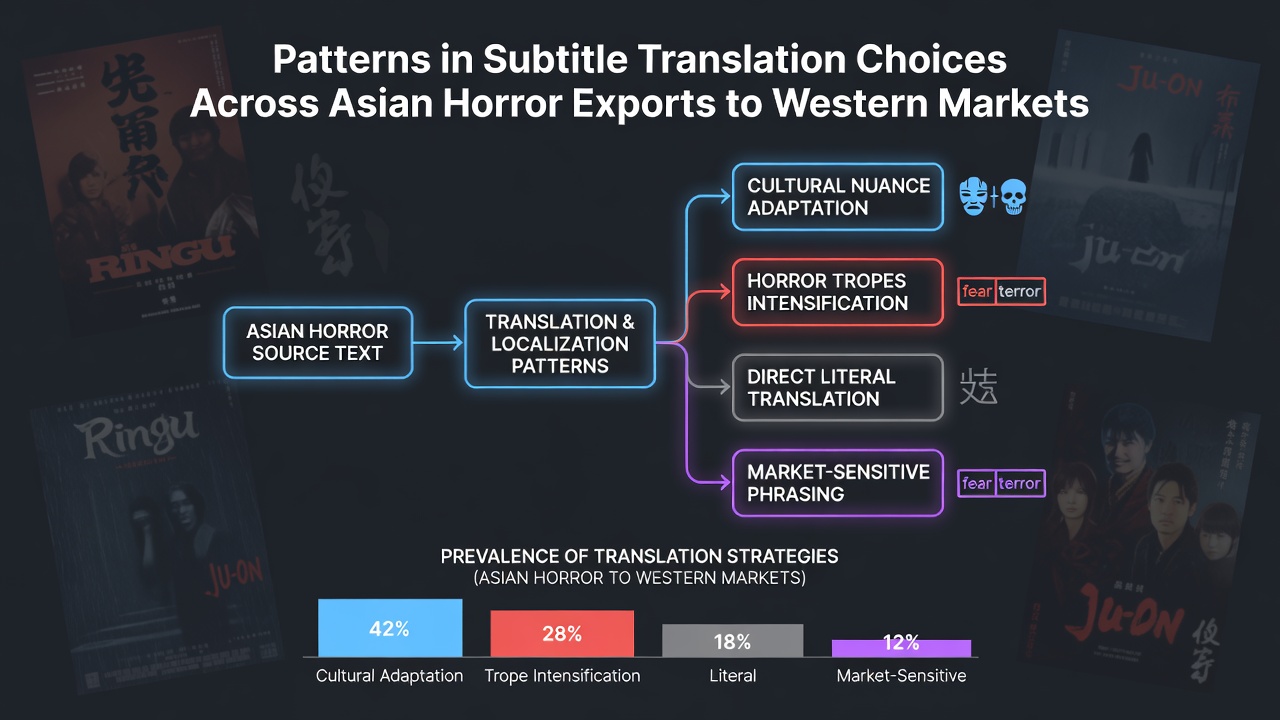 Researchers have tracked subtitle translation patterns in Asian horror films exported to Western markets since the early 2000s wave of Japanese and Korean titles gained traction, and those patterns reveal consistent strategies around cultural adaptation, terminology standardization, and regulatory compliance. Distributors often balance literal renderings of dialogue with adjustments that maintain narrative tension while aligning with audience familiarity levels in regions like North America, Europe, and Australia. Studies from translation databases show that early exports such as Ring (1998) and Ju-on (2002) featured subtitles that retained many Japanese honorifics and supernatural descriptors, yet later releases shifted toward more interpretive phrasing to clarify plot mechanics for non-native viewers. This evolution stems from feedback loops between subtitle houses and test screenings rather than isolated artistic decisions.
Core Translation Patterns Observed in Major Exports
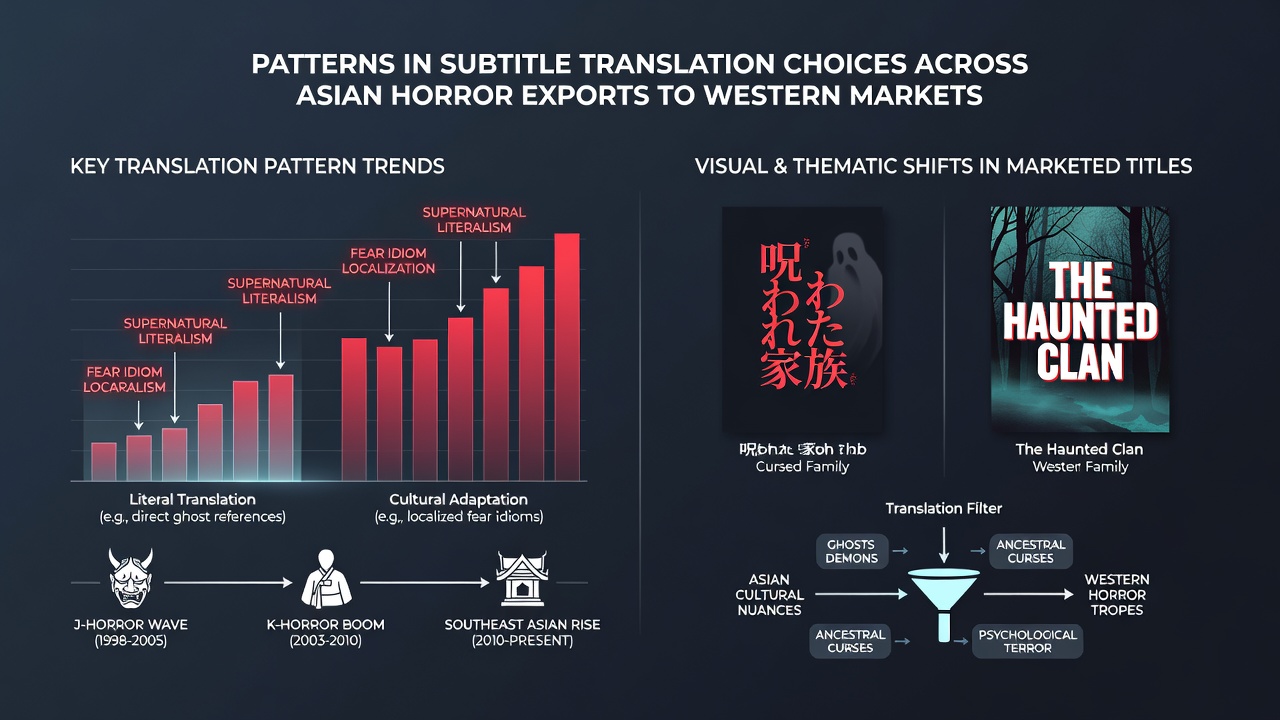
Data from multiple film archives indicates three recurring approaches in subtitle choices for Asian horror titles headed West. The first involves direct lexical mapping of ghost and curse terminology, where terms like "onryo" or "gwishin" receive standardized English equivalents such as "vengeful spirit" across multiple studio releases. The second centers on cultural reference softening, where family hierarchy references or regional folklore allusions get explanatory expansions or substitutions to avoid confusion during key horror set pieces.
The third pattern covers pacing adjustments, since horror sequences often rely on rapid dialogue exchanges that subtitle timing constraints force translators to condense without losing atmospheric buildup. Observers note these choices appear consistently across Thai, Indonesian, and Malaysian productions that followed the initial J-horror and K-horror successes.Influences from Market Regulations and Audience Data
Regulatory frameworks in destination countries shape many subtitle decisions, because classification boards review translated text alongside visual content for age ratings. Australian and Canadian reviewers, for instance, have flagged specific supernatural phrasing in past submissions, prompting distributors to refine wording before final delivery. In contrast, US theatrical releases tend to prioritize subtitle brevity to match rapid editing rhythms common in contemporary Asian horror.
What's interesting is how streaming platform analytics have added another layer since 2018, with viewer retention metrics highlighting moments where subtitle phrasing either sustained or broke immersion. Reports compiled through 2025 show that adaptive translations correlate with higher completion rates for films like Train to Busan (2016) and The Medium (2021) in Western catalogs.
Case Examples from Recent Releases
Take the export trajectory of Indonesian horror titles such as The Queen of Black Magic (2019), where subtitle teams opted for expanded explanations of ritual elements during possession scenes rather than literal word-for-word transfers. Similar decisions surfaced in Japanese productions released through 2024, where translators replaced certain folklore references with broader descriptors while preserving the original sentence rhythm in dialogue-heavy sequences.
Researchers at institutions tracking global film distribution note that these adjustments rarely alter core plot points yet frequently modify emotional valence in curse-related exchanges. Data released in June 2026 from collaborative projects between the Australian Film Institute and translation studies departments in the United States further documents how such patterns have stabilized across more than 150 Asian horror exports examined between 2015 and 2025.
Technological and Collaborative Factors
Advances in subtitle software have enabled tighter integration between translators, directors, and localization teams, allowing real-time adjustments based on audience testing in multiple territories. Industry organizations including the European Audiovisual Observatory have compiled figures showing increased use of glossaries that standardize horror lexicon across languages while still permitting regional variations for UK versus North American releases.
Those who've examined subtitle files from films like Incantation (2022) and Talk to Me (2022) find that collaborative workflows reduce inconsistencies that once appeared when individual translators handled entire projects in isolation. This shift coincides with the growth of pan-Asian co-productions that require subtitle versions compatible with simultaneous multi-territory rollouts.
Conclusion
Patterns in subtitle translation for Asian horror exports to Western markets continue to reflect a blend of linguistic fidelity, regulatory awareness, and audience retention priorities. Evidence from distribution records and academic reviews points to ongoing refinement rather than abrupt changes, with terminology standardization and cultural adaptation remaining central across different source countries. Continued monitoring of new releases through 2026 and beyond will clarify whether emerging AI-assisted tools alter these established practices or simply accelerate existing workflows.