19 Jul 2026
Mapping Viewer Migration Trends Between Genre Clusters During Platform Transitions
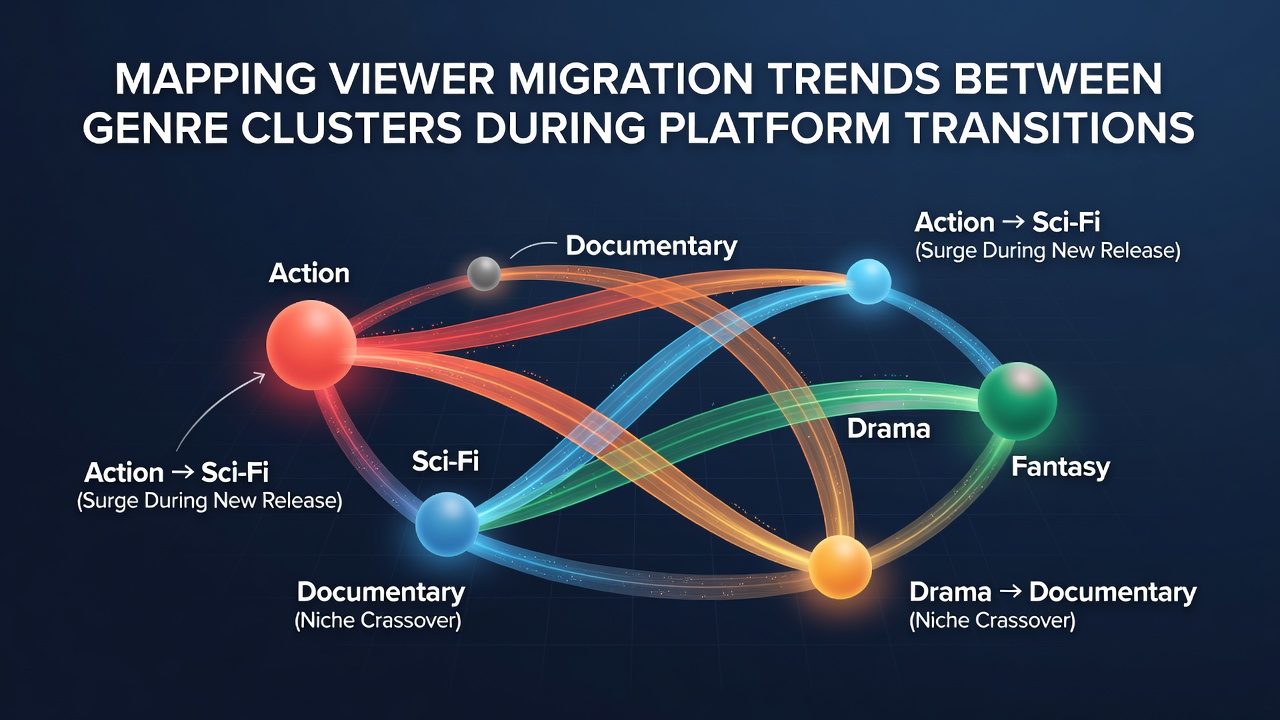
Streaming services have reshaped how audiences move between content categories, and researchers track these shifts by examining genre clusters during platform changes. Data from multiple markets shows that viewers often transition from one service to another while carrying preferences for certain narrative styles, yet they frequently adjust those tastes based on availability and recommendation systems. Studies indicate that clusters such as action-adventure, drama-thriller, and comedy-romance form distinct groups where migration patterns emerge most clearly when users switch providers.
Defining Genre Clusters in Viewer Data
Analysts group titles into clusters by analyzing overlap in user viewing histories rather than relying solely on traditional labels. According to reports from the European Audiovisual Observatory, viewers who start with high-energy action sequences tend to sample similar titles on new platforms before exploring adjacent clusters like science fiction. This clustering approach reveals that platform transitions accelerate movement between groups when algorithms highlight cross-genre recommendations during the first weeks after signup.
Researchers at universities in Australia have mapped these movements using anonymized datasets, and their findings show consistent pathways from prestige drama clusters into documentary clusters when subscribers encounter curated collections on the new service. The patterns hold across age demographics, although younger viewers demonstrate faster migration rates between clusters compared with older cohorts who maintain steadier preferences.
Platform Transitions and Observed Shifts
When major services undergo interface updates or content licensing changes, viewer logs capture temporary spikes in cross-cluster exploration. Data collected through 2026 illustrates that July saw elevated migration from comedy clusters into mystery clusters on several North American platforms following the addition of new original series. Observers note that these spikes coincide with promotional pushes rather than organic preference changes, and they often stabilize within four to six weeks.
Canadian regulatory filings reveal similar dynamics during the rollout of new regional services, where users leaving established platforms carried strong attachments to crime drama clusters but quickly sampled local content clusters once exposed to them. The movement appears driven by both algorithmic nudges and the simple fact of fresh catalogs becoming available.
Methods Used to Track Migrations
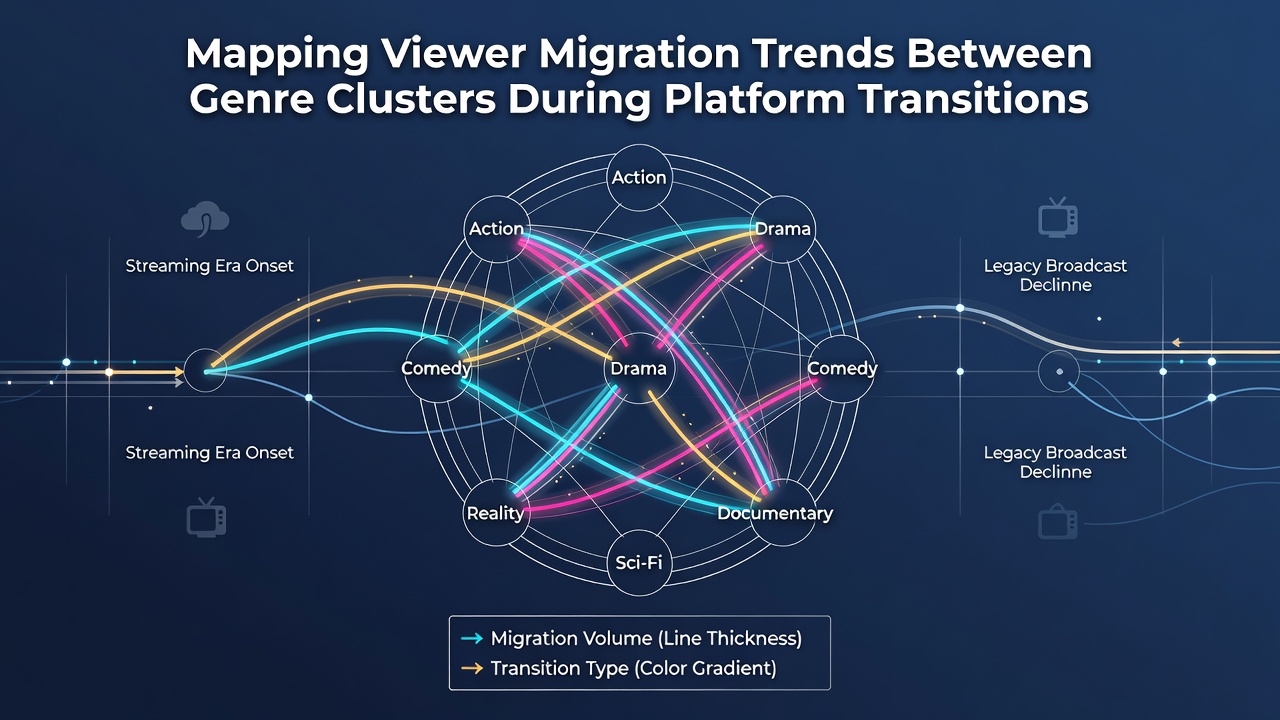
Companies and academic teams employ network analysis to visualize how users flow between clusters. Nodes represent genre groupings while edges capture the volume of viewers moving from one to another during a defined period. This technique highlights bottlenecks where certain clusters lose users rapidly and attract fewer replacements from other groups.
One study released in early 2026 by a research consortium in the United States applied this method to data spanning three major platform shifts. Results indicated that documentary clusters gained viewers from both reality and drama clusters at higher rates than expected, particularly among subscribers who had recently canceled previous services. The analysis also identified retention differences, with action clusters showing stronger loyalty during transitions compared with lighter entertainment clusters.
Regional Variations in Migration Behavior
European markets display distinct patterns compared with North American ones. Viewers in several EU countries demonstrate higher movement from historical drama clusters into contemporary thriller clusters when switching to services that emphasize subtitled content. Reports compiled by academic groups in Germany and France suggest that language availability plays a measurable role in these shifts, since users seek familiar narrative structures in new linguistic settings.
Australian data collected by industry associations points to stronger retention within comedy clusters during platform changes, possibly because local productions maintain cultural specificity that travels less easily across services. These regional differences underscore how content libraries and recommendation engines interact with existing viewer habits rather than overwriting them outright.
Conclusion
Mapping viewer migration between genre clusters during platform transitions provides concrete insights into how audiences adapt when services evolve. The data gathered through 2026 demonstrates repeatable pathways, regional distinctions, and the influence of algorithmic presentation on the speed and direction of those movements. Continued monitoring of these patterns allows platforms and content creators to anticipate where viewers will land after each transition.