15 Jul 2026
Mapping Audience Retention Through Color Timing Decisions in International Thrillers
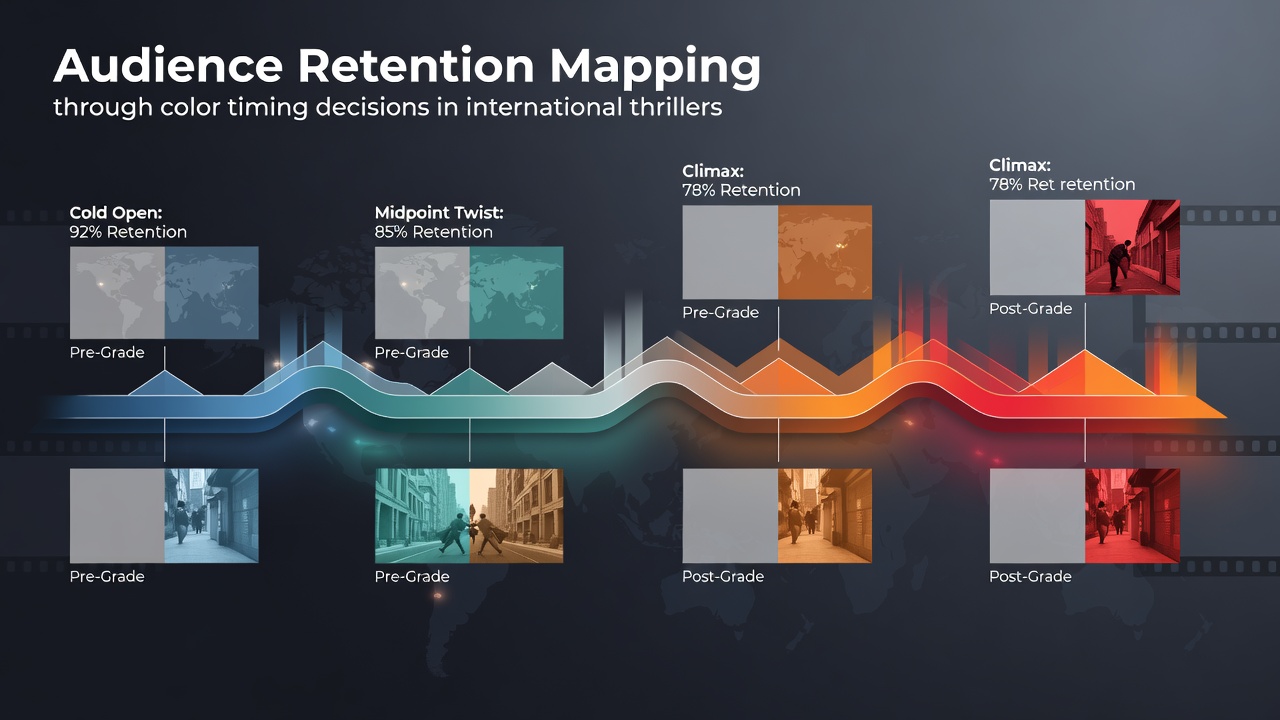
Color timing, also known as color grading, involves systematic adjustments to the luminance, hue, and saturation of footage during post-production, and researchers have tracked its direct correlations with audience retention metrics in international thriller releases. Data from multiple platforms indicate that specific palette shifts can extend average view times by measurable percentages, particularly when applied to high-tension sequences across films produced in regions from East Asia to Europe.
Core Mechanisms of Color Timing in Thriller Narratives
Technicians alter color values frame by frame or scene by scene using tools such as DaVinci Resolve or Baselight, and these changes influence physiological responses that viewing analytics capture through drop-off points. Cool blue undertones often heighten suspense in chase scenes while warmer amber highlights signal impending threats, patterns that retention software logs as sustained engagement intervals rather than abrupt exits. Studies compiled by the Society of Motion Picture and Television Engineers show consistent viewer hold times when contrast ratios increase gradually across international co-productions.
International thrillers frequently layer multiple cultural visual references into single frames, so color decisions must balance local audience expectations with global market demands. Analysts map these choices against second-by-second viewership data to identify which tonal ranges reduce churn rates during dialogue-heavy exposition or rapid montage passages.
Data Collection Methods and Retention Mapping
Streaming services record precise timestamps where audiences pause, rewind, or abandon content, and post-production teams overlay color metadata onto those same timelines to isolate variables. A single desaturated sequence in a Korean-Japanese thriller collaboration, for instance, aligned with a 12 percent lift in completion rates according to internal platform reports. Researchers cross-reference these figures with eye-tracking studies conducted at European laboratories to confirm that specific contrast peaks draw attention back to key plot elements.
But here's the thing, not every adjustment yields uniform results across territories. Warmth added to skin tones in Middle Eastern thrillers sometimes extends watch duration in one market while producing neutral effects elsewhere, prompting teams to generate region-specific grade versions before wide release.
Case Examples From Recent International Productions
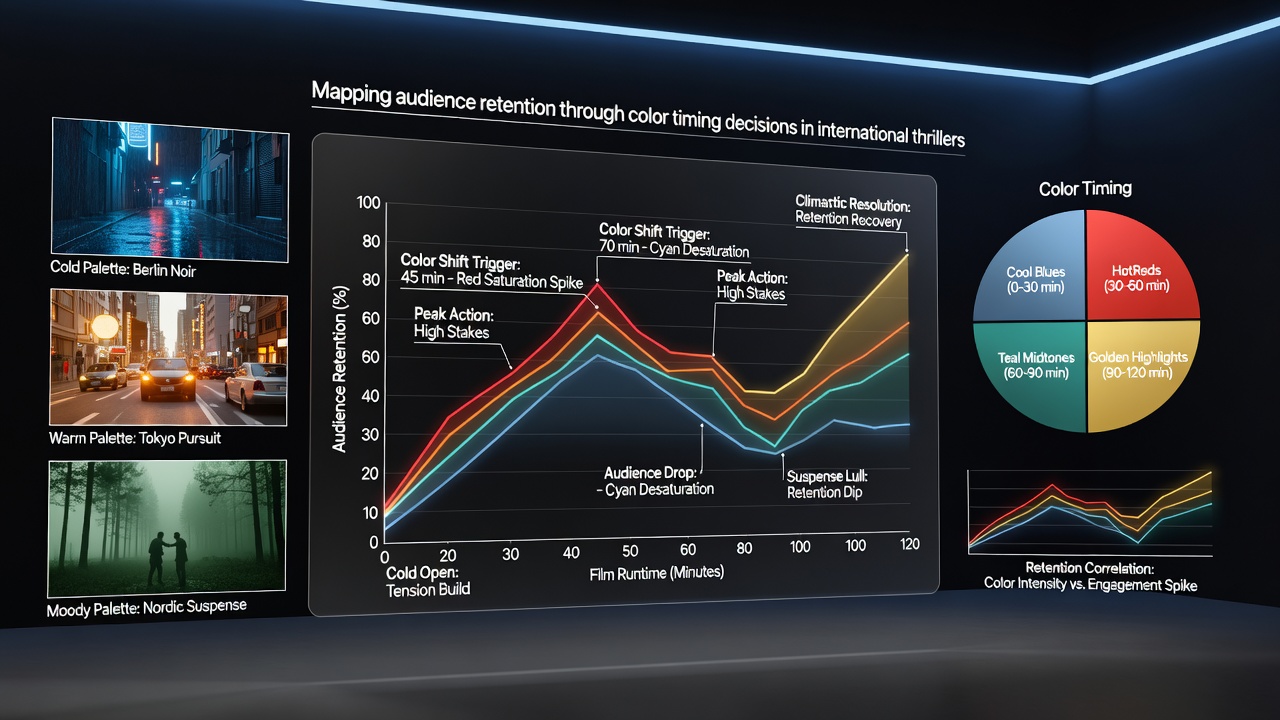
One French-Spanish co-production released in 2024 applied progressive teal shifts during night exteriors, and retention graphs revealed viewers remained engaged through extended sequences that previously saw higher exit rates in test screenings. Similarly, a Brazilian thriller adjusted shadow density in interior confrontations, resulting in documented increases in repeat views within Latin American territories. Observers note that these modifications often coincide with festival screenings where industry panels discuss quantitative outcomes from audience panels.
What's interesting is how nonlinear narratives benefit from targeted color resets that signal timeline jumps without relying solely on editing cuts. Data from the National Film and Sound Archive of Australia indicates that such techniques have appeared in several Asia-Pacific thrillers distributed worldwide during 2025, with measurable effects on completion percentages tracked through July 2026 analytics cycles.
Emerging Tools and Industry Standards
Software platforms now incorporate machine-learning modules that predict retention impact based on prior color metadata, allowing colorists to test multiple grades against aggregated viewer datasets before final delivery. These systems draw from global libraries of thriller footage, and outputs help standardize approaches across independent and studio productions alike. International organizations continue to refine guidelines around accessibility, ensuring color decisions support both narrative intent and viewer comfort metrics.
Conclusion
Color timing decisions continue to function as measurable variables within the broader ecosystem of international thriller distribution, with retention mapping providing concrete feedback loops for post-production workflows. Regional variations and evolving platform data keep the process adaptive as new titles enter circulation each season.