Illusions on Canvas: Matte Paintings That Built Hollywood's Imaginary Landscapes
22 Apr 2026
Illusions on Canvas: Matte Paintings That Built Hollywood's Imaginary Landscapes
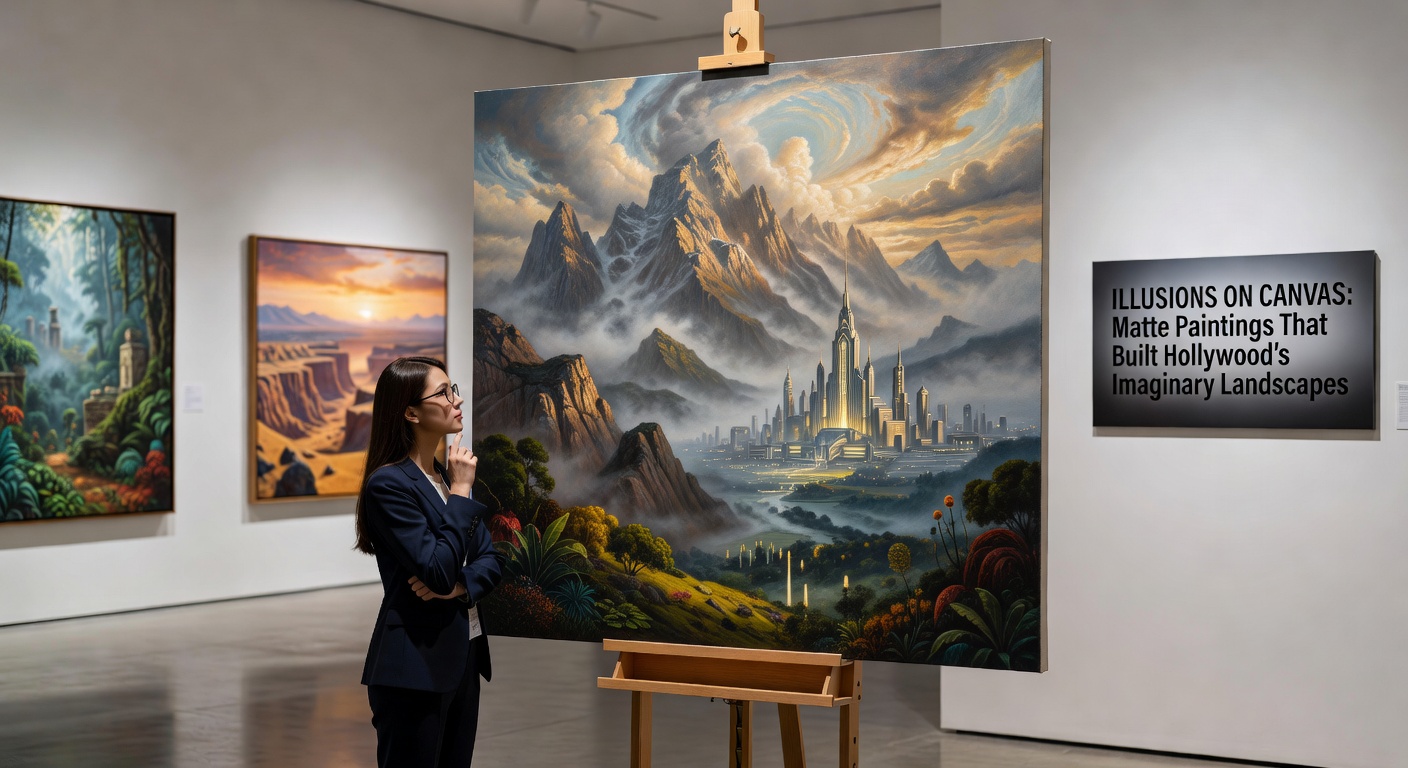
Matte paintings, those masterful illusions crafted on glass or canvas, transformed Hollywood's soundstages into impossible worlds long before digital effects dominated screens; artists painted intricate landscapes that crews projected behind live-action footage, fooling audiences into believing actors wandered through towering cities, alien planets, or medieval castles, and this technique, born from necessity in the silent era, peaked during the Golden Age of cinema when budgets couldn't stretch to location shoots across continents.
The Birth of an Art Form in Silent Cinema
Norman Dawn pioneered matte paintings around 1900, scratching away emulsion on film negatives to insert painted skies or backgrounds, but true glass mattes emerged in the 1920s as studios like MGM and Paramount embraced the method; painters applied oil or watercolor directly onto large glass sheets, creating depth with highlights, shadows, and forced perspective, while technicians split the live-action image using an optical printer to composite the elements seamlessly. And what's interesting, this process demanded precision since any misalignment or bubble in the paint could shatter the illusion under studio lights.
Early adopters turned to it for epic scale; Fritz Lang's Metropolis (1927) featured matte shots of futuristic skyscrapers rising above crowds, where artists like Eugen Schüfftan combined miniatures with paintings to evoke a dystopian sprawl that still captivates viewers. Observers note how these techniques stretched limited resources, allowing German Expressionist influences to seep into Hollywood via immigrants like Willy Kemplen, who refined the beam-splitter method for RKO Pictures.
Golden Age Masters and Their Techniques
By the 1930s, matte departments flourished at major studios; Universal's Jack Cosgrove painted misty forests for Dracula (1931), layering translucent glazes to mimic fog rolling through Carpathian peaks, while MGM's Warren Newcombe crafted the opulent Baghdad skyline in The Thief of Bagdad (1940), complete with minarets piercing a starry night and reflections shimmering on a river below. But here's the thing: painters worked upside down on glass to prevent drips, flipping the plate only for projection, and they incorporated animation stands for moving elements like clouds or birds, adding life to static vistas.
Experts have observed that multiplane mattes, stacking several glass layers, created parallax as cameras moved, fooling the eye much like Disney's multiplane camera for animation; take one case at 20th Century Fox where Emil Kosa Jr. layered a painted horizon, midground cliffs, and foreground rocks for The Razor's Edge (1946), producing a Himalayan trek that rivaled real footage from Tibet. Data from the Visual Effects Society indicates over 200 matte shots appeared in that film alone, showcasing how artists matched lighting angles precisely to live plates photographed months earlier.
Artists like Petro Vlahos advanced the craft with blue-screen mattes in the 1950s, isolating foregrounds via color separation while painters like Albert Whitlock at Universal extended Mount Rushmore's flanks for North by Northwest (1959), blending painted rockfaces with Cary Grant dangling from the monument; this shot, projected behind a rear-screen process stage, endures as a benchmark for seamless integration. And turns out, painters often scouted real locations for photo references, then exaggerated scales or added impossible features like cascading waterfalls where none existed.
Epic Landscapes in Blockbuster Epics
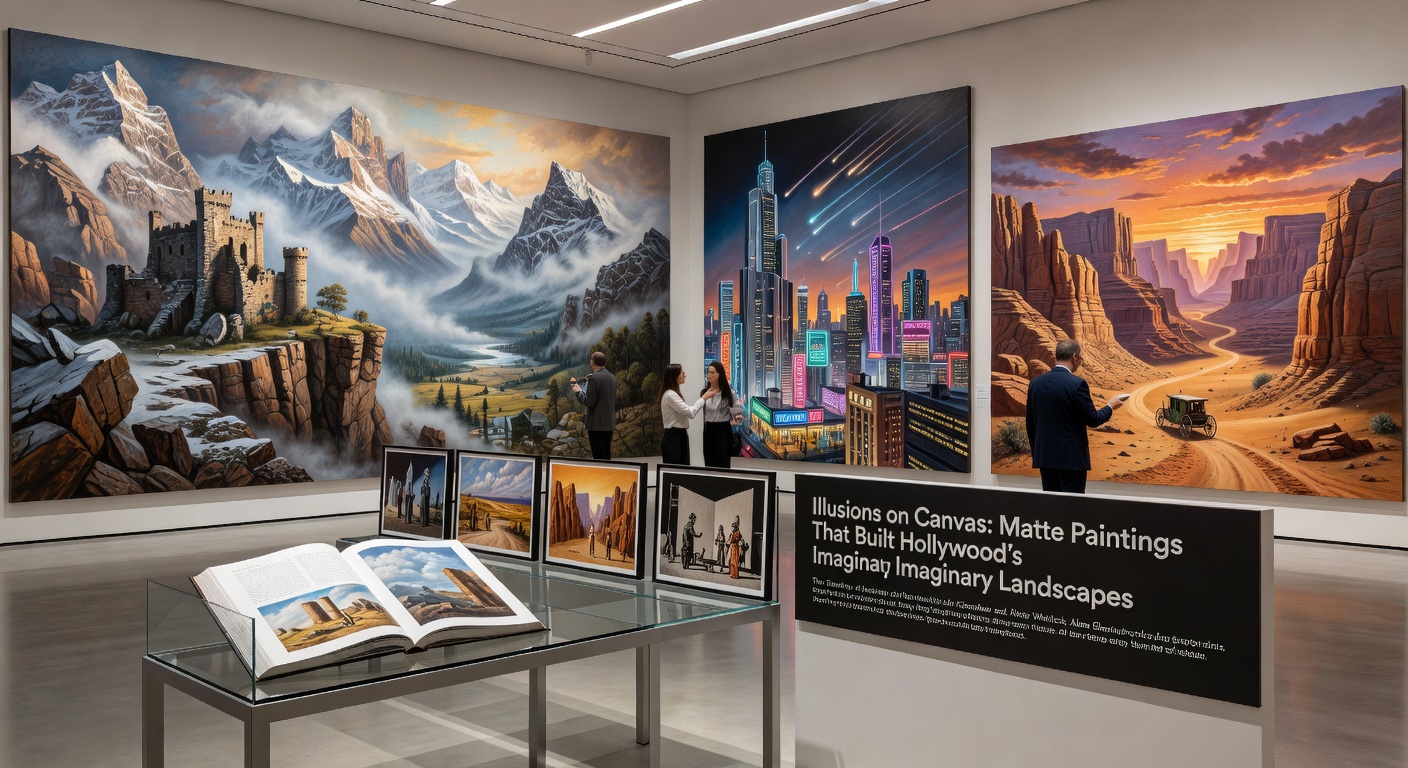
Matte paintings defined sword-and-sandal spectacles of the 1950s and 1960s; in Ben-Hur (1959), Newcombe's team depicted Jerusalem's walls stretching endlessly, with painted crowds and arches receding into haze, while live chariots raced in foreground miniature sets; studies from the University of Southern California Cinematic Arts Library, which houses original matte cels, reveal painters used aerial photos from Israel, then amplified the city's grandeur to suit director William Wyler's vision. So, audiences gasped at vistas that spanned miles, all contained within a Burbank warehouse.
Alfred Hitchcock leaned heavily on mattes for vertigo-inducing heights; Vertigo (1958) featured Whitlock's Mission Dolores extension, where a painted tower facade loomed over the real church, and The Birds (1963) incorporated fiery skies over Bodega Bay painted by Syd Dutton, who later founded Matte World Digital. Yet, disaster films pushed boundaries further: in The Poseidon Adventure (1972), mattes depicted the capsized ship's flooded corridors stretching into infinity, with water effects layered via animation cells over the glass.
Fantasy realms benefited immensely; Ray Harryhausen's Jason and the Argonauts (1963) used mattes for Talos's bronze realm, where jagged peaks and stormy seas, painted by stop-motion collaborator Desmond Dickinson, framed skeleton battles. People who've studied these note how artists anticipated camera moves by pre-painting motion blurs or distortions, ensuring fluidity when composited.
Key Artists Who Painted Hollywood's Dreams
Albert Whitlock stands out for sheer volume, contributing to over 100 films including The Hindenburg (1975), where his fiery airship wreckage extended miniature models into vast fields; alongside partner Danny Fowley, they built a legacy at Universal, painting everything from Jaws' (1975) underwater chasms to Earthquake's (1974) fractured skylines. Meanwhile, Syd and Bill Dutton revolutionized animation mattes at their studio, crafting the fiery pit for Dragonslayer (1981), where molten lava bubbled realistically via layered paints and projected lights.
Women artists broke ground too; Barbara Coleman painted for Disney's Mary Poppins (1964), extending cherry tree lanes into endless London vistas, and her work on Bedknobs and Broomsticks (1971) featured Naboombu Island's animal kingdom rising from painted savannas. Observers point out that these painters trained in fine arts or architecture, bringing skills in perspective and atmospheric rendering essential for convincing depth.
In the 1980s, as budgets swelled, mattes peaked in Raiders of the Lost Ark (1981), with Kit West's Tanis dig site extending into pyramid fields painted over aerials from Tunisia; but here's where it gets interesting: digital scanning began preserving these glass plates, digitizing fragile artworks for restoration.
The Shift to Digital and Lasting Legacy
CGI eroded traditional mattes by the 1990s; Industrial Light & Magic favored wireframe models for Jurassic Park (1993), yet hybrids persisted, like matte painter Chris Evans contributing hand-painted skies to Titanic (1997) before full digital takeover. Figures from the Visual Effects Society show matte shots dropped from 20% of effects budgets in 1980 to under 5% by 2000, as software like Nuke allowed pixel-level manipulation.
That said, revivals occur in indie films and restorations; the 4K remaster of Blade Runner (1982) enhanced Syd Mead's original mattes of dystopian L.A., revealing details lost in prints. And now, in April 2026, the Academy Museum of Motion Pictures hosts "Canvas to Code: Matte Paintings in Transition," exhibiting original glass plates from Close Encounters of the Third Kind alongside their digital scans, drawing crowds to see how painted UFO landing sites at Devils Tower inspired today's procedural landscapes.
Researchers discover that modern VFX artists study matte techniques for matte painting software plugins, blending analog mastery with pixels; take one studio reviving Whitlock's methods for Dune (2021) reshoots, where digital brushes mimic oil glazes on vast Arrakis dunes. It's noteworthy that archives like the Academy's preserve over 5,000 plates, ensuring these illusions endure.
Conclusion
Matte paintings built Hollywood's imaginary realms through sheer artistry and technical wizardry, turning blank stages into unforgettable backdrops that spanned history and fantasy; although digital tools have largely replaced glass and brushes, the principles of light, perspective, and illusion persist, reminding filmmakers that the most convincing worlds start with a skilled hand on canvas. Experts agree this craft's influence lingers in every sweeping vista, proving paint's power to conjure the impossible.