27 May 2026
Framing the Story: Aspect Ratios in 1960s International Arthouse Films
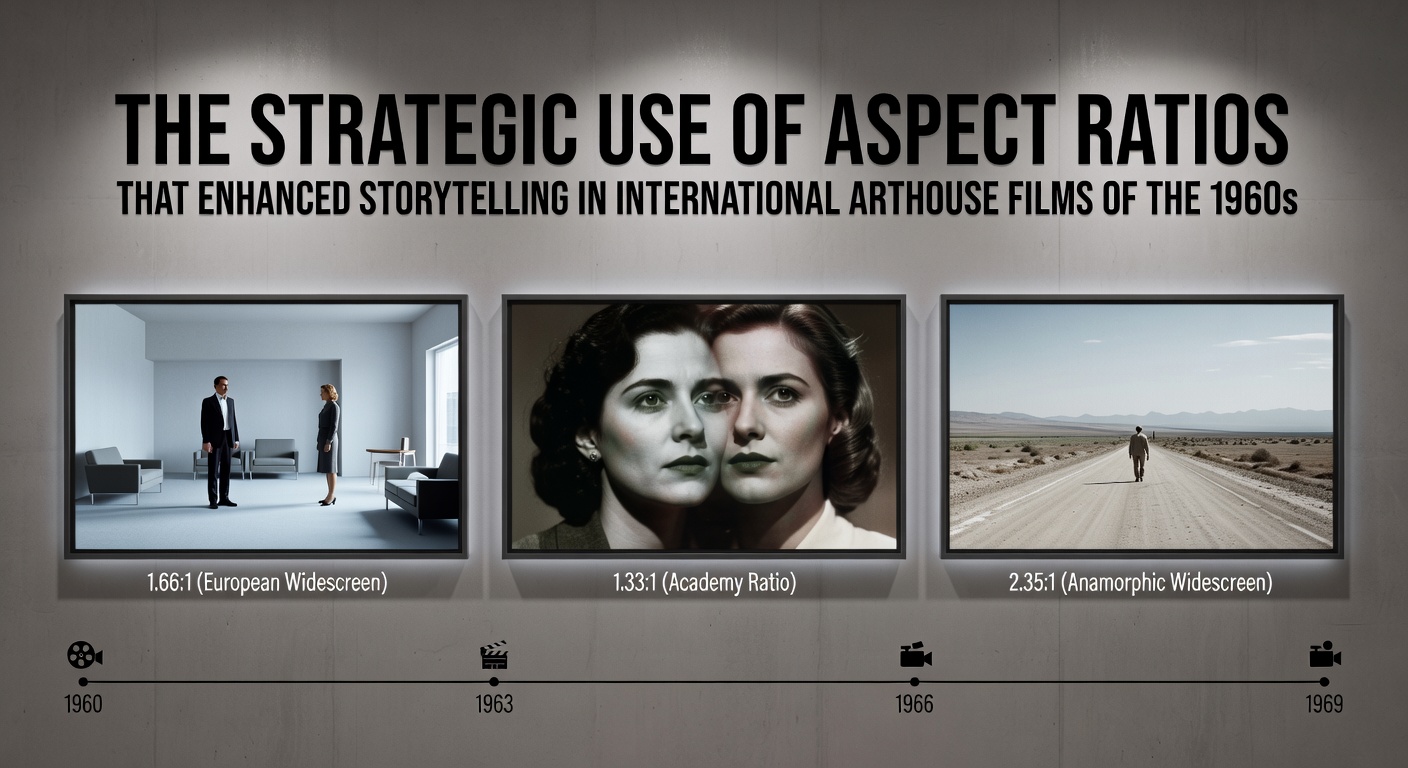
Directors working in international arthouse cinema during the 1960s turned aspect ratios into deliberate storytelling devices, and they moved away from uniform framing to match narrative tone with visual structure. Research from film archives shows that many European and Asian productions shifted between the traditional Academy ratio of 1.37:1 and emerging widescreen formats like 1.66:1 or 2.35:1 anamorphic, while they used those choices to isolate characters or expand environments. Data from restoration projects indicates that filmmakers such as Michelangelo Antonioni and Jean-Luc Godard selected ratios based on how space could reflect emotional states rather than simply following studio standards.
Technical Shifts in Postwar Cinema
After World War II the film industry faced competition from television, so studios promoted widescreen processes that included CinemaScope and similar systems, yet arthouse directors often rejected those conventions to create intimate or fragmented compositions. Observers note that in France the New Wave directors shot on standard 35mm cameras with 1.37:1 framing in many early works, although they cropped prints later for wider release, and this flexibility allowed precise control over how viewers encountered urban alienation or sudden bursts of motion. Studies from European film institutes reveal that Japanese directors in the same decade experimented with Tohoscope anamorphic lenses to stretch landscapes while keeping human figures compressed, thereby emphasizing isolation within vast natural settings.
Case Examples from Key Directors
Antonioni employed 1.85:1 framing in films such as L'Avventura to leave empty space around characters, and this approach underscored themes of disappearance and emotional distance without relying on dialogue. Researchers at the National Film and Sound Archive of Australia documented how similar techniques appeared in Australian and British productions that drew influence from European models, where wider ratios captured desolate cityscapes or coastal horizons that mirrored internal voids. Godard alternated between Academy ratio and slight anamorphic squeezes in titles like Vivre sa vie, and he used the shifts to mark transitions between documentary-style sequences and more stylized dramatic moments.
Ingmar Bergman maintained 1.37:1 for Persona while inserting deliberate frame intrusions such as film burns or split compositions, and these interventions broke the expected rectangular boundary to signal psychological fragmentation. Data collected by the International Federation of Film Archives shows that such ratio manipulations appeared consistently across Scandinavian and Eastern European productions during the decade, where directors coordinated framing decisions with editing rhythms to heighten tension or release.
Geographic Variations and Influences
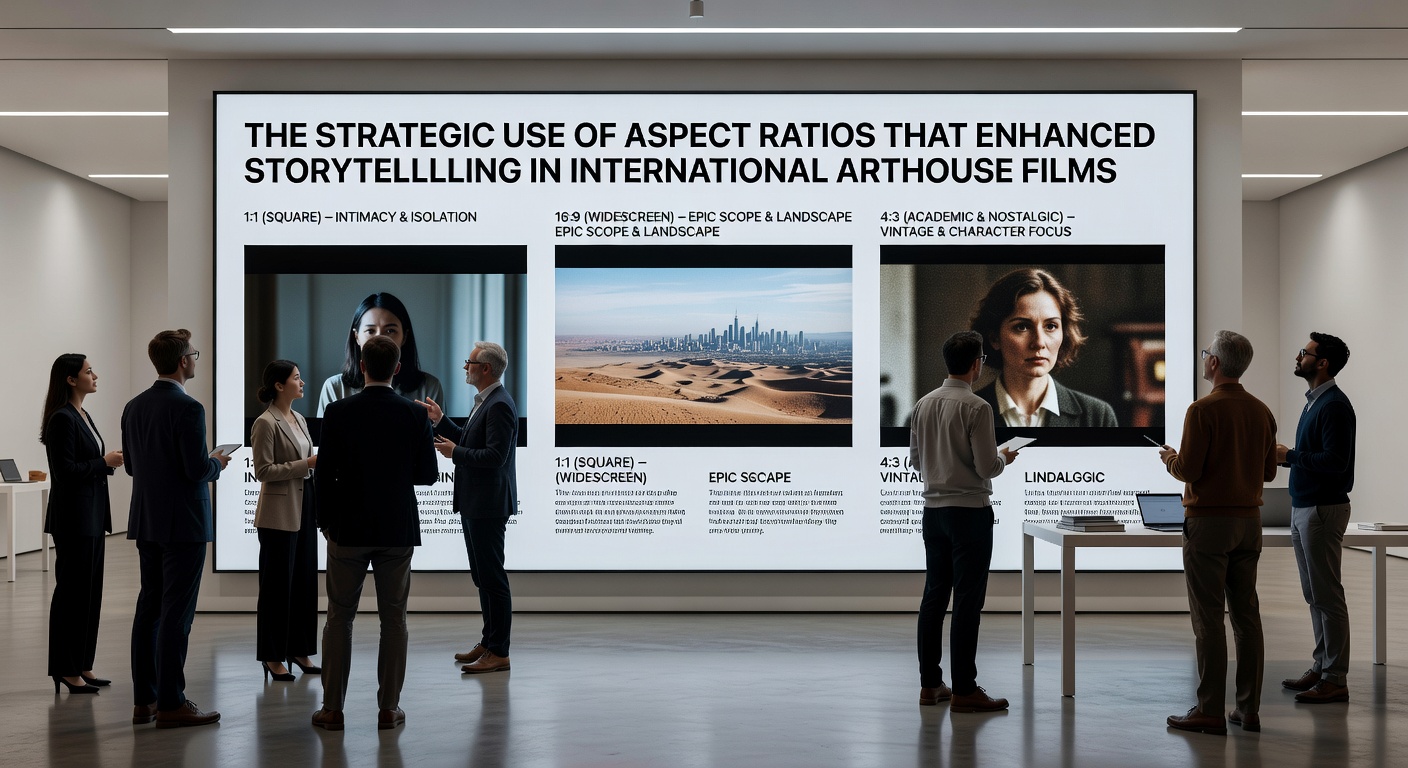
Italian cinema leaned toward wider ratios to accommodate architectural backdrops that became active participants in the story, whereas French productions frequently retained narrower frames to focus attention on faces and gestures. Academic papers from the University of Toronto Film Research Group indicate that Canadian filmmakers who studied abroad brought these techniques home, adapting European ratio strategies to prairie landscapes that dwarfed their human subjects. In each region the choice of ratio functioned as an unspoken narrator that guided audience perception before any spoken line occurred.
Restoration work scheduled for May 2026 at festivals including the Cannes Classics program and the Sydney Film Festival will present newly scanned prints that preserve original aspect ratio markings, and archivists expect these screenings to clarify how directors timed ratio changes to coincide with pivotal narrative beats. Figures from the Japanese Film Archive confirm that directors such as Hiroshi Teshigahara combined 2.35:1 with static long takes to turn empty space into a character that reflected existential themes.
Legacy in Technical and Narrative Terms
Camera crews collaborated with cinematographers to mark negative edges with precise framelines that prevented projectionists from cropping intended compositions, and this attention to detail ensured that the storytelling intent survived distribution. Industry reports from the British Film Institute highlight how 1960s arthouse films established precedents for later directors who continued to treat aspect ratio as a variable rather than a fixed parameter. Those who studied the original camera negatives discovered that many prints carried multiple ratio options printed simultaneously, allowing theaters to select formats according to screen dimensions while preserving the core visual strategy.
Conclusion
The strategic deployment of aspect ratios in 1960s international arthouse cinema produced measurable effects on narrative delivery, and evidence from preserved prints demonstrates that directors selected formats to reinforce themes of space, isolation, and psychological depth. Continued restoration efforts keep these techniques visible for new audiences, and the same methods influence contemporary filmmakers who revisit the period's experimental approaches.