29 May 2026
Voices Forged in Time: Dialect Coaches Perfecting Authenticity for Epic Historical Narratives
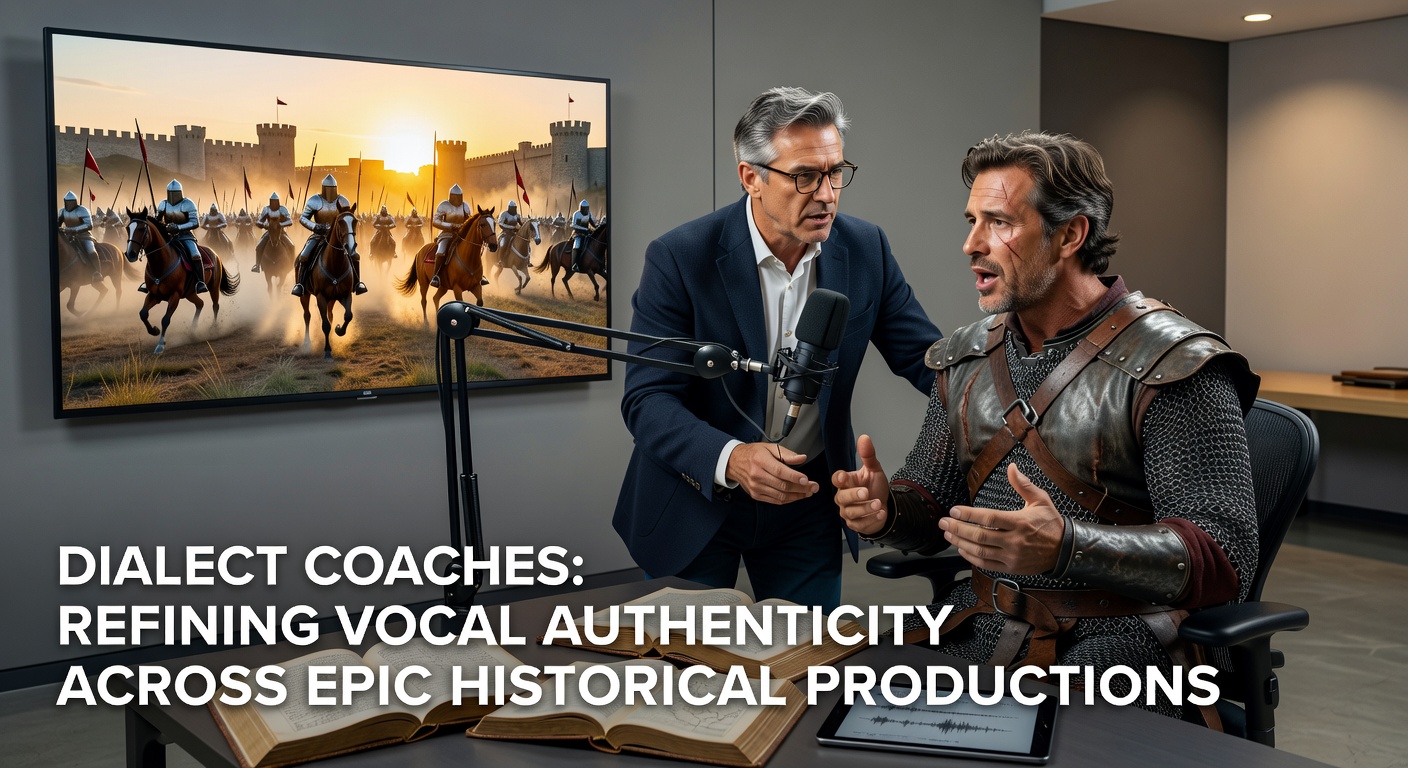 Dialect coaches have long played essential roles in epic historical productions by helping actors master speech patterns that align with specific eras and regions. Their work ensures vocal delivery matches the cultural and temporal details of stories set in ancient Rome, medieval Europe, or colonial America, where every phonetic choice adds layers of credibility to large-scale narratives. Those who've examined production records note that coaches often begin with extensive linguistic research drawn from period texts, recordings of surviving dialects, and academic studies on historical phonology. This preparation allows them to create tailored training programs that address not just pronunciation but also rhythm, intonation, and vocabulary shifts common in past centuries.
 Coaches have supported projects that span from Renaissance Italy to 19th-century America, where they refine elements like dropped consonants or elongated vowels to match documented speech habits of those times. This attention to detail becomes particularly evident in scenes involving public addresses or intimate conversations, both of which require distinct vocal textures.
Dialect coaches have long played essential roles in epic historical productions by helping actors master speech patterns that align with specific eras and regions. Their work ensures vocal delivery matches the cultural and temporal details of stories set in ancient Rome, medieval Europe, or colonial America, where every phonetic choice adds layers of credibility to large-scale narratives. Those who've examined production records note that coaches often begin with extensive linguistic research drawn from period texts, recordings of surviving dialects, and academic studies on historical phonology. This preparation allows them to create tailored training programs that address not just pronunciation but also rhythm, intonation, and vocabulary shifts common in past centuries.Key Techniques Employed by Dialect Specialists
Coaches rely on a range of methods to achieve precise results across demanding shoots. They break down accents into core components such as vowel shifts and consonant articulations, then guide performers through repetitive drills that build muscle memory for sustained scenes. Sessions frequently incorporate audio references from linguistic archives alongside custom recordings of reconstructed speech, which helps actors internalize patterns without relying solely on modern approximations. In productions spanning multiple continents, coaches adapt these approaches to account for variations in source materials from different scholarly institutions. One study from the University of Toronto's linguistics department highlighted how targeted coaching reduced inconsistencies in ensemble casts by integrating data from historical corpora, allowing teams to maintain uniformity even when filming schedules stretched over months.Notable Contributions Across Major Productions
Several epic historical films demonstrate the measurable impact of dialect work on overall authenticity. Productions recreating ancient battles or royal courts have drawn on coaches who specialize in languages like Latin-inflected English or regional Celtic inflections, where subtle adjustments transform standard dialogue into period-specific exchanges. Observers note that these efforts extend beyond lead roles to supporting characters and crowds, ensuring background voices reinforce the main narrative rather than distract from it. In cases involving international casts, coaches collaborate with translators to preserve original meanings while aligning deliveries with target dialects.
Coaches have supported projects that span from Renaissance Italy to 19th-century America, where they refine elements like dropped consonants or elongated vowels to match documented speech habits of those times. This attention to detail becomes particularly evident in scenes involving public addresses or intimate conversations, both of which require distinct vocal textures.