22 Jul 2026
Audience Feedback Loops: Test Screenings and Narrative Twists in Studio Productions
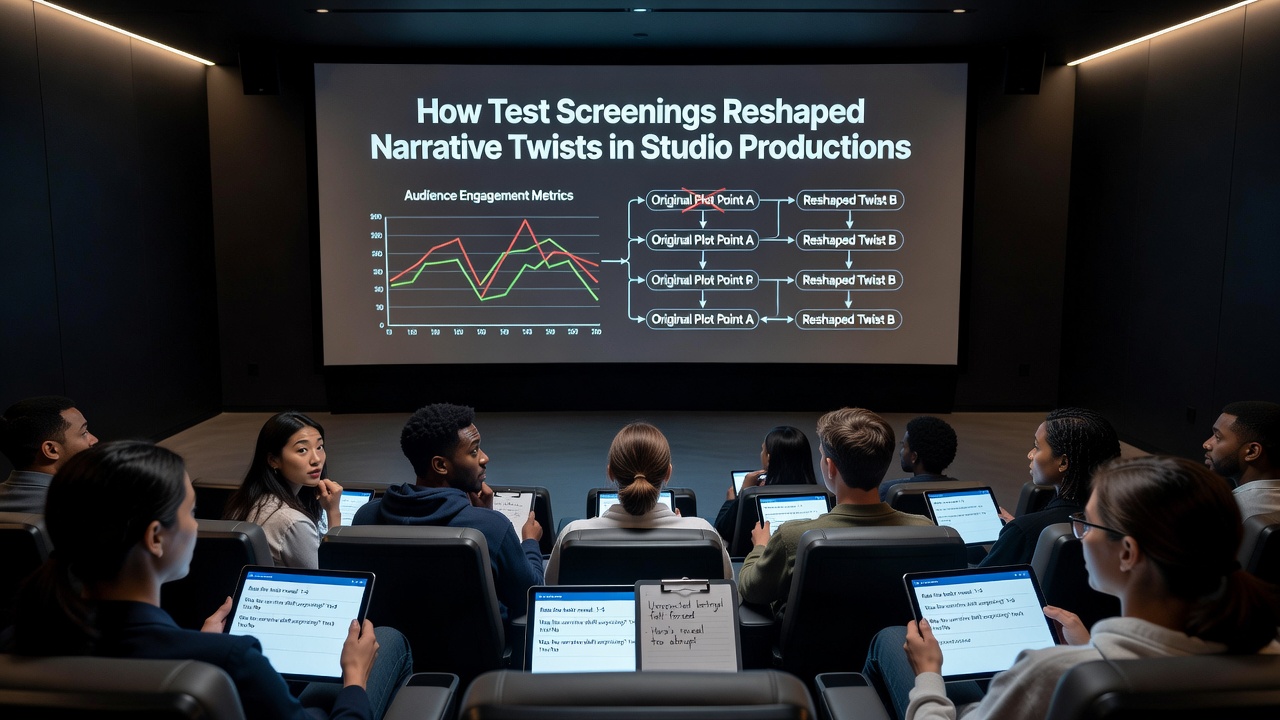
Test screenings emerged as a structured practice in Hollywood during the 1970s, when studios began inviting recruited audiences to preview unfinished films and record responses on cards or through focus groups, and these sessions quickly became tools for refining plot structures including the placement and execution of narrative twists.
Producers track metrics such as applause patterns, exit poll scores, and verbal feedback to identify moments where audience confusion or disappointment occurs, then authorize rewrites or reshoots that alter the reveal sequences while preserving overall runtime and budget parameters.
Early Adoption and Data Collection Methods
By the early 1980s major studios formalized test screening protocols, employing third-party research firms to assemble demographically balanced groups across multiple cities, and these organizations compiled quantitative scores alongside qualitative notes that highlighted which twist revelations felt predictable or unsatisfying.
Figures from industry reports show that studios conducted an average of three to five screenings per wide-release title during this period, with adjustments to third-act reversals occurring in roughly 40 percent of cases according to internal production logs preserved at institutions such as the Library of Congress.
Case Examples from the 1980s and 1990s
One production team behind a 1987 thriller revised the antagonist's identity after initial audiences expressed frustration with an overly telegraphed clue structure, prompting the addition of a new scene that shifted the twist delivery by twelve minutes and introduced a previously unseen supporting character.
Another studio handled a 1995 action film where test groups reacted negatively to a mid-film betrayal reveal; editors recut the sequence to withhold key visual information until later, resulting in higher approval ratings during follow-up screenings held in Chicago and Atlanta.
Technological Shifts and Modern Practices
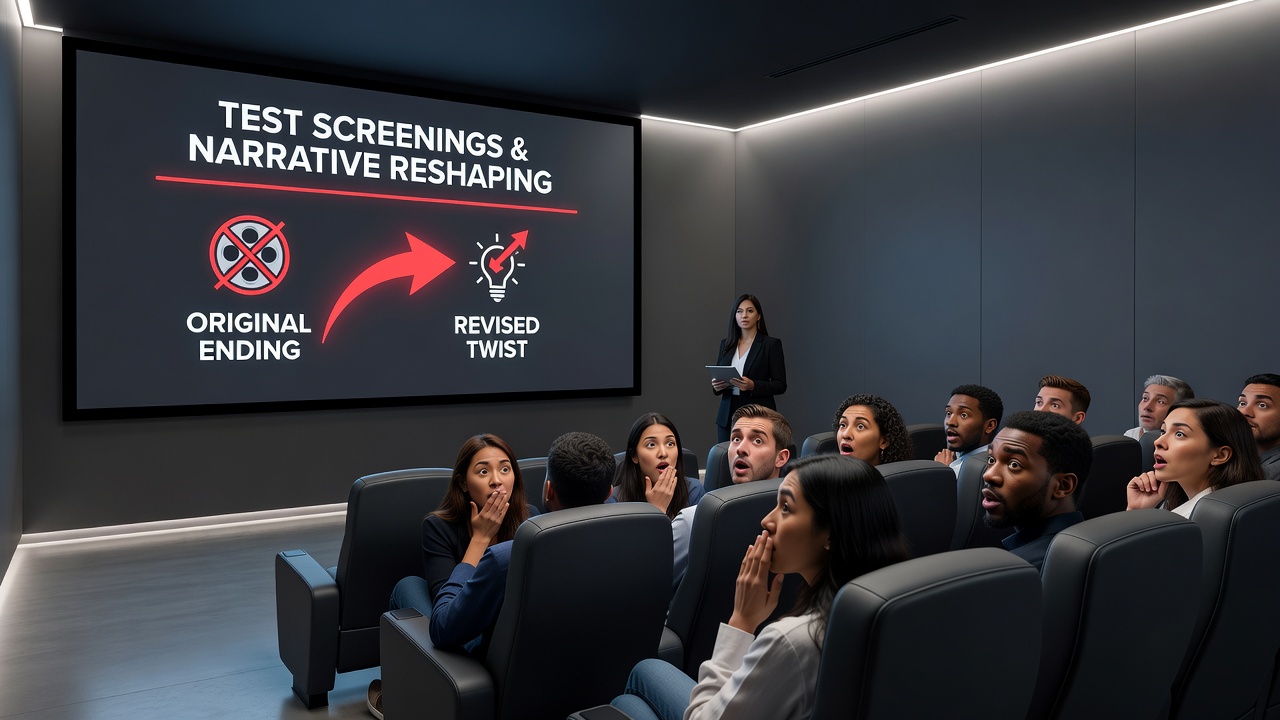
Digital editing suites introduced in the late 1990s allowed rapid incorporation of test screening notes, enabling teams to generate alternate twist versions within days rather than weeks, and this capability expanded further after 2010 when online survey platforms replaced paper cards for real-time data aggregation.
Researchers at academic centers including those affiliated with the University of California system have documented how streaming-era test screenings now incorporate biometric tracking such as heart-rate monitors and eye-tracking software, revealing precise seconds when viewers disengage from a narrative pivot.
Regional Variations in Studio Approaches
European production companies operating under co-financing agreements with American studios sometimes integrate test screening results differently, prioritizing cultural context adjustments to twists that reference local folklore, whereas North American teams focus more on pacing metrics collected across multiple time zones.
Data compiled by the National Film and Sound Archive of Australia indicates that international test screenings for joint ventures increased by 25 percent between 2018 and 2024, with twist modifications often addressing subtitle readability alongside narrative clarity.
Impact on Franchise Continuity
Long-running series rely on test screenings to maintain consistency across installments, with continuity supervisors reviewing audience reactions to ensure a twist in one film does not contradict established lore from prior entries, and this process has grown more complex since shared-universe models became standard in the 2010s.
Production schedules now allocate dedicated weeks for these screenings, typically occurring after principal photography wraps but before final color grading, allowing time for targeted pickups that refine twist mechanics without disrupting visual effects pipelines.
Conclusion
Archival records and production analyses demonstrate that test screenings have functioned as iterative feedback mechanisms shaping narrative twists in studio films for decades, with quantitative and qualitative data guiding decisions on reveal timing, character motivation, and audience surprise levels. These practices continue to evolve alongside new distribution platforms, and as of July 2026 studios maintain dedicated research divisions to process screening insights across global markets.